
Stigma in financial communities tends to attach itself to instruments rather than to the behavior of participants, which creates a particular kind of unfairness. CFDs acquired their reputation through a combination of genuine misuse, aggressive marketing by poorly regulated offshore providers, and a media narrative that focused disproportionately on retail losses while largely ignoring the structural factors that produced them. Singapore’s analytical community, the engineers, data scientists, and quantitatively trained professionals who apply rigorous thinking to most decisions in their lives, absorbed that narrative and filed CFDs in the category of instruments serious people avoided. The filing is being revised, and the revision is happening methodically rather than impulsively.
The catalyst has not been a single moment but an accumulation of better information reaching people who process information carefully. CFD trading for beginners content has improved substantially across the educational landscape, with structured courses, community-based mentorship programs, and platform-embedded learning resources replacing the promotional material that once dominated the space. When analytically minded Singaporeans encounter genuinely rigorous education about how contracts for difference work, how leverage functions mathematically across different scenarios, and what the regulatory framework administered by the Monetary Authority of Singapore actually requires of licensed brokers, the instrument looks considerably less alarming than its reputation suggested.
The risk management dimension is where Singapore’s analytical crowd tends to engage most seriously. Understanding that a CFD position’s maximum loss is a function of position size, leverage ratio, and stop placement rather than an open-ended liability reconfigures the risk perception that drove much of the original stigma. Professionals accustomed to modeling outcomes across probability distributions find that the mathematics of leveraged trading, while genuinely demanding, is not beyond analytical comprehension. The work required to understand it properly is what separates informed participation from the uninformed speculation that generated the cautionary stories.
Peer visibility has accelerated the stigma revision in ways that formal education cannot replicate. When a respected colleague with a quantitative background discusses their CFD trading practice openly and with obvious competence, it disrupts the association between the instrument and the profile of participant that cautionary narratives describe. Singapore’s professional networks are tight enough that these individual examples travel quickly. A data scientist at a technology firm discussing systematic approaches to the instrument at a Friday evening gathering changes the room’s perception more effectively than any article or webinar, because the credibility is personal and directly observable.
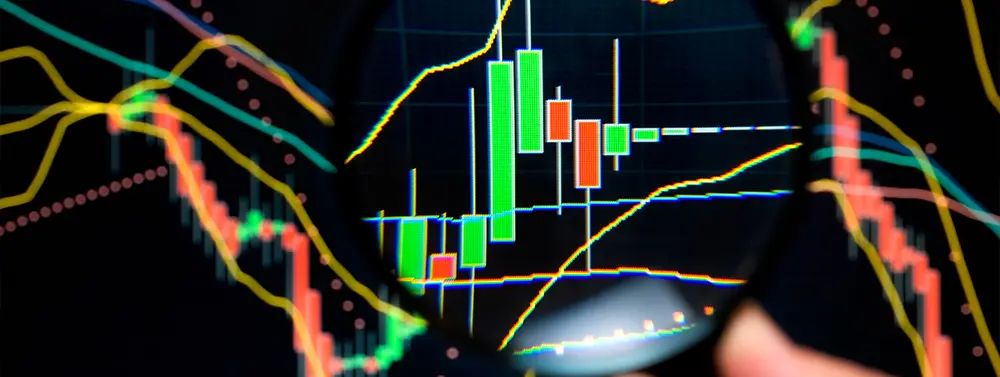
Platform quality has contributed to the shift in ways that are easy to underestimate. The analytical tools available within MetaTrader 5, cTrader, and TradingView create environments that feel intellectually serious rather than gamified, which matters considerably to a demographic that responds poorly to interfaces designed around excitement rather than precision. When the platform experience matches the analytical standard that these professionals apply elsewhere in their lives, the cognitive dissonance between their self-image and their trading activity diminishes. The instrument begins to feel like a natural extension of their existing analytical practice rather than a departure from it.
What the loosening stigma ultimately reflects is Singapore’s analytical community doing what it does best: updating its position when the evidence warrants it. CFD trading for beginners is no longer a phrase that triggers automatic dismissal among this group. It has become, for a growing number of them, the starting description of a practice they are building with the same systematic rigor they bring to everything else.