
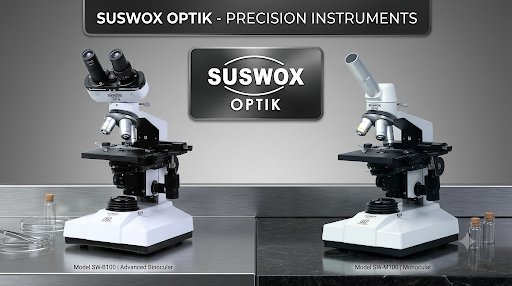
Buying a microscope is rarely a one-time decision. Whether you run a school science department, a diagnostic laboratory, or an industrial quality-control unit, the instrument you purchase today will shape the accuracy of your work for years. That is why the choice of who you buy from matters just as much as the model you pick. A reliable partner supports you long after the invoice is paid, and a weak one leaves you stranded the moment something goes wrong.
The first thing to look at is manufacturing depth. There is a real difference between a trading company that simply rebrands imported units and a genuine builder that controls optics, mechanics, and assembly under one roof. When you deal directly with the people who make the instrument, calibration, spare parts, and service become far simpler. This is one reason many institutions prefer to source from established microscope manufacturers rather than middlemen who add cost without adding accountability.
Optical quality is the heart of any microscope, so ask pointed questions. What glass is used in the objectives? Are the lenses anti-reflection coated? How is chromatic aberration controlled at higher magnifications? A serious builder will answer these questions clearly and may even show you resolution charts. Vague marketing language usually signals that the seller does not fully understand the product.
Local presence is another practical concern. Importing a microscope from overseas can mean long waits for a single replacement bulb or a cracked stage clip. Working with a domestic microscope manufacturer in india shortens that gap dramatically, because spares ship within the country and engineers can visit your site if a fault is complex. For busy labs that cannot afford downtime, this proximity is worth a great deal.
Consider the breadth of the catalogue too. A single research group may need an upright biological scope this year and a stereo zoom instrument the next. Suppliers who cover the full range let you standardise on one brand, which simplifies training, servicing, and procurement paperwork. Look for a company that serves students, hospitals, pharmaceutical labs, and electronics inspection alike, since that variety is a sign of engineering maturity.
After-sales support deserves close attention. Request the warranty terms in writing and clarify what is covered. Ask how long typical repairs take and whether loaner units are available. Speak to existing customers if you can; a company confident in its work will happily share references from universities, government institutes, and medical colleges.
Price matters, of course, but chase value rather than the lowest number. A cheap instrument that drifts out of alignment or yields dim images costs far more in wasted time than it ever saved at purchase. Reputable microscope suppliers in india will explain exactly what you are paying for, from the quality of the objectives to the smoothness of the focus mechanism, so you can compare quotes on a like-for-like basis.
Finally, think about the future. Digital imaging, camera attachments, and measurement software are now standard expectations in many fields. Choose a partner whose products can grow with you, accepting cameras and accessories without forcing a complete replacement. An instrument that adapts to new needs protects your investment.
In short, the right microscope partner combines genuine manufacturing capability, honest optical specifications, fast local support, and a catalogue wide enough to meet changing demands. Take the time to evaluate these factors before you sign. The reward is a fleet of instruments you can trust, backed by people who stand behind their work and want your laboratory to succeed for the long term.
It also helps to visit the facility or request a virtual tour if distance makes that impractical. Seeing how instruments are assembled and tested tells you more than any brochure. You learn whether the company employs trained opticians, whether it tests every unit before dispatch, and whether its quality control is systematic rather than casual. Manufacturers who welcome such scrutiny are usually the ones worth trusting with an important purchase.
Documentation is another marker of a serious partner. Clear manuals, calibration certificates, and detailed specifications signal a company that takes its work seriously and expects to be held to account. When paperwork is thin or evasive, it often reflects deeper gaps in engineering discipline, so treat comprehensive documentation as a positive sign.
Think carefully about training as well. A supplier who offers to train your staff on correct use and basic care adds lasting value, because most instrument faults stem from mishandling rather than defects. A short session at installation can prevent years of avoidable damage and keep your microscopes performing at their best throughout their working life.
Reputation within your own field is worth investigating before you commit. Ask peers at other institutions which brands they rely on and which they have abandoned. Word of mouth among laboratory managers is remarkably honest, because these are people who live with the consequences of a purchase every day. A supplier consistently recommended by working professionals has usually earned that trust the hard way.