
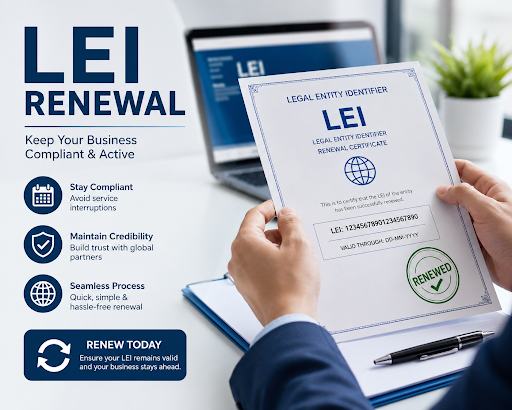
Businesses participating in regulated financial activities must ensure that their Legal Entity Identifier (LEI) remains active and up to date. An expired LEI can affect financial reporting, banking transactions, and regulatory compliance, making timely renewal an essential part of business operations.
Understanding the LEI renewal process India helps organizations maintain uninterrupted financial activities and comply with regulatory requirements. Knowing the renewal steps, eligibility criteria, required documents, and timelines enables businesses to complete the process smoothly while avoiding unnecessary delays.
Understanding LEI Renewal
LEI renewal is the process of verifying and updating the information associated with an existing Legal Entity Identifier. It confirms that the registered business details remain accurate and valid within the global LEI database.
Unlike obtaining a new LEI, renewal focuses on reviewing existing information rather than creating a new identity. Regular renewal helps maintain transparency and ensures financial institutions can rely on updated entity information.
Why Timely Renewal Is Important
Renewing an LEI before its validity expires helps businesses continue participating in regulated financial activities without interruptions. It also demonstrates a commitment to maintaining accurate business records.
Financial institutions often verify the status of an LEI before processing specific transactions. An active LEI supports smooth communication between businesses, banks, and regulatory authorities.
Eligibility for LEI Renewal
Before submitting the application, businesses should ensure that their legal information matches the latest official records. Companies should also review changes related to their registered name, address, ownership, or legal structure. Updating this information during the renewal process helps maintain accurate records and avoid verification issues.
-
Existing LEI Holders
Businesses with an existing LEI should renew it before the validity period ends. Early renewal prevents interruptions to financial activities, supports ongoing compliance, and ensures that financial institutions can access up-to-date business information.
-
Companies with Updated Business Information
Organizations should update any changes to their legal name, address, or ownership during renewal. Accurate information improves transparency, reduces processing delays, and keeps business records consistent across financial databases.
-
Businesses Involved in Regulated Transactions
Entities involved in banking, securities, insurance, or cross-border transactions should maintain a valid LEI. Timely renewal supports uninterrupted financial activities and helps businesses meet regulatory requirements.
-
Financial Institutions and Corporate Entities
Banks, investment firms, insurers, and corporate organizations benefit from active LEI records. Updated information simplifies verification, improves reporting accuracy, and strengthens confidence among financial institutions.
-
Organizations Seeking Continued Compliance
Businesses should include LEI renewal in their regular compliance planning. Tracking renewal dates and regularly reviewing records help maintain uninterrupted compliance and avoid accidental expiration.
Documents Required for LEI Renewal
Preparing the necessary documents before starting the renewal process helps avoid unnecessary delays. Businesses should ensure that all submitted information is accurate and matches their latest official records.
The exact documentation may vary depending on the entity type and any recent changes in business information. Reviewing the requirements in advance helps complete the renewal process more efficiently.
- Valid existing LEI details
- Business registration documents
- Proof of the registered office address
- Authorized signatory details
- Updated company information, if applicable
- Supporting documents for any legal or ownership changes
Renewal Timeline and Verification Process
The renewal timeline depends on the accuracy of the information submitted and the completion of the verification process. Providing complete and correct documents helps speed up approval and reduces the possibility of additional verification requests.
Businesses should avoid waiting until the last moment before their LEI expires. Renewing in advance allows sufficient time for verification while ensuring uninterrupted compliance with financial regulations.
Steps to Complete the Renewal Process
A structured approach makes LEI renewal easier and reduces the chances of errors. Following each step carefully helps businesses complete the process with confidence while maintaining accurate records.
Proper verification at every stage ensures that the updated information is reflected correctly in the global LEI database.
-
Review Existing Business Information
The first step is to verify the details linked to the existing LEI, including the legal name, registered address, and entity status. Checking this information beforehand helps identify any updates that need to be made during the renewal process.
-
Prepare Supporting Documents
Businesses should keep all required documents ready before beginning the application. Having accurate documentation available makes verification smoother and minimizes delays caused by incomplete submissions.
-
Submit the Renewal Request
Once the information has been reviewed, the renewal application can be submitted through a reliable LEI service provider. Careful review before submission helps ensure that all details are complete and accurate.
-
Complete the Verification Process
After submission, the information is verified against official records. During LEI certificate renewal, prompt responses to any additional verification requests help complete the process without unnecessary delays.
-
Confirm Active LEI Status
After successful verification, businesses should confirm that their LEI has been renewed and is listed as active. Keeping a record of the updated validity period also helps organizations plan future renewals more effectively.
Best Practices for Hassle-Free LEI Renewal
Planning LEI renewal in advance helps businesses maintain compliance and avoid interruptions in financial activities. A well-managed renewal process also keeps business information accurate and up to date.
-
Maintain Accurate Business Records
Keeping legal and registration details updated makes renewal faster and reduces verification delays. Businesses should promptly update changes to their legal name, address, or ownership information to maintain accurate records.
-
Track Renewal Deadlines
Monitoring renewal dates and setting reminders helps businesses avoid an inactive LEI. Early renewal also provides enough time to resolve any documentation or verification requirements.
-
Choose a Reliable Service Provider
A trusted LEI service provider simplifies the renewal process and offers guidance throughout the application. Professional support helps businesses complete renewals accurately and efficiently.
-
Verify Submitted Information
Reviewing all application details before submission helps prevent processing delays. Matching the submitted information with official business records also improves the chances of quicker approval.
Conclusion
Maintaining an active Legal Entity Identifier helps businesses stay compliant and avoid disruptions in regulated financial activities. Organizations planning to LEI register or manage an existing LEI should follow a structured renewal process to ensure accurate records and uninterrupted operations.
For those looking for a trusted LEI service provider, Indoglobal LEI offers reliable registration, renewal, and transfer services. With streamlined processes and dedicated support, the company helps businesses maintain valid LEI records while meeting global financial compliance requirements.