
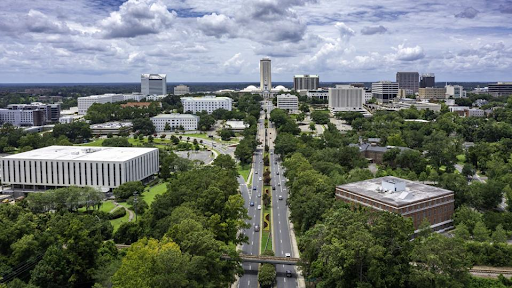
Tallahassee, the capital of Florida, offers a combination of history, outdoor recreation, arts, culture, museums, parks, and local attractions. The city has a different character from Florida’s coastal destinations, with historic neighborhoods, shaded roads, nature areas, universities, and cultural landmarks shaping the local experience.
For visitors planning a trip, the range of things to do in Tallahassee makes it possible to build an itinerary around history, outdoor activities, family attractions, or a relaxed city visit. Tallahassee also has more than 700 miles of trails and waterways, providing several options for walking, cycling, paddling, and nature activities.
1. Visit the Florida Capitol Complex
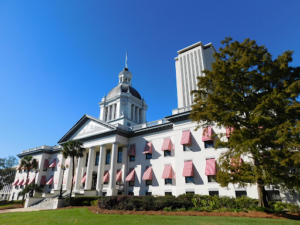
The Florida Capitol Complex is an important stop for visitors interested in the state’s political and architectural history. The complex includes the Historic Capitol and the modern Capitol building.
The Historic Capitol provides insight into Florida’s governmental history, while the newer building represents the state’s present-day legislative functions. The area also includes monuments and public spaces that can be visited as part of a downtown itinerary.
The Capitol Complex works well as an early stop because several other downtown attractions are located within a relatively short distance.
2. Spend Time at Cascades Park
Cascades Park is a 24-acre public park in downtown Tallahassee. It includes paved paths, open green areas, water features, a children’s splash area, and spaces for outdoor recreation.
The park is suitable for a relaxed walk, an afternoon break, or an evening visit. Its location also makes it convenient to combine with downtown sightseeing.
The park is connected with the Adderley Amphitheater, which hosts concerts and other performances throughout the year. Current events and performance schedules can change, so checking the official event calendar before visiting is advisable.
3. Explore the Tallahassee Museum
The Tallahassee Museum combines natural history, wildlife, cultural exhibits, and outdoor recreation across a large lakeside property.
The museum features native wildlife habitats, historic buildings, nature trails, and educational exhibits. It also has an aerial adventure course with zip lines and elevated obstacles, providing an additional activity for visitors interested in outdoor recreation.
Because the museum combines several types of attractions in one location, it can suit families as well as visitors interested in Florida’s natural and cultural history.
4. Walk Through Railroad Square Art District
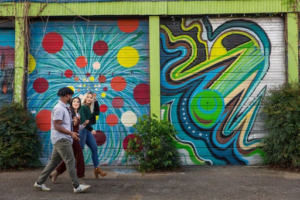
Railroad Square Art District is one of Tallahassee’s notable creative areas. The historic warehouse district contains artist studios, galleries, small businesses, and locally focused shops.
The area offers a different side of the city compared with its government buildings and historic landmarks. Art, independent businesses, and community events contribute to its character.
Railroad Square can also be combined with other downtown and nearby cultural attractions during the same day.
5. Learn About Local History at Mission San Luis
Mission San Luis is a living-history site connected to the Apalachee people and Spanish colonial history. The site recreates aspects of life in the early 18th century and presents information about the communities and institutions that existed in the area.
The location is particularly relevant for visitors interested in Florida’s early history. Historical demonstrations and reconstructed structures help provide context beyond conventional museum displays.
6. Visit Goodwood Museum & Gardens
Goodwood Museum & Gardens offers another opportunity to learn about Tallahassee’s historic past. The property includes a historic house, gardens, mature trees, and grounds associated with the city’s earlier development.
According to the Tallahassee visitor guide, the main house dates back around 170 years and sits within approximately 20 acres of gardens and historic landscape.
The setting provides a quieter alternative to busier downtown attractions and is suitable for visitors interested in architecture, gardens, and local history.
7. Spend Time Outdoors at Tom Brown Park
Tom Brown Park is a major outdoor recreation area in Tallahassee. The park provides opportunities for walking, cycling, and other outdoor activities.
It is also associated with Tallahassee’s broader trail network. Local outdoor guides highlight activities such as mountain biking and the park’s pump track as options for visitors looking for more active recreation.
The park can be included in an itinerary focused on outdoor activities without requiring a long drive outside the city.
8. Visit Wakulla Springs
Wakulla Springs is located outside central Tallahassee and is one of the area’s major natural attractions. The spring-fed environment provides opportunities for wildlife viewing, water-based activities, and outdoor recreation.
The Wakulla River is also suitable for kayaking, while wildlife in the surrounding area includes a variety of birds and other native species. The visitor guide specifically highlights kayaking along the spring-fed river and the possibility of seeing manatees.
Because Wakulla Springs is outside the central city area, transportation planning is important when adding it to a Tallahassee itinerary.
9. Take a Drive Along Tallahassee’s Canopy Roads
Tallahassee is known for its historic canopy roads, where mature live oaks create shaded corridors over the roadway. Several officially protected canopy roads extend through the surrounding area.
Miccosukee Road, Meridian Road, and Old Centerville Road are among the routes highlighted by Visit Tallahassee. Road conditions vary by route, so checking the route before setting out is useful.
A canopy-road drive can add a slower-paced scenic activity to an itinerary, particularly for visitors interested in landscapes and historic rural settings.
10. Visit Lake Jackson Mounds Archaeological State Park
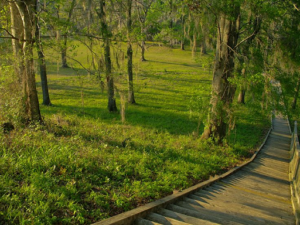
Lake Jackson Mounds Archaeological State Park provides an opportunity to learn about the region’s prehistoric Native American history.
The archaeological site includes ancient earthwork mounds and interpretive information about the people who lived in the area. It offers a different perspective on Tallahassee’s history, extending beyond the city’s colonial and governmental landmarks.
The park is particularly suitable for visitors interested in archaeology, indigenous history, and Florida’s early cultural landscapes.
11. Visit the John G. Riley Center & Museum
The John G. Riley Center & Museum focuses on African American history and heritage in Tallahassee. The historic Riley House represents the life and contributions of John G. Riley and provides context about African American leadership and community development in the city.
The museum is an important cultural stop for visitors who want to understand the different communities and historical experiences that shaped Tallahassee.
12. Spend Time at Florida State University and Florida A&M University
Tallahassee’s identity is strongly influenced by its universities. Florida State University and Florida A&M University contribute to the city’s cultural, educational, athletic, and entertainment scenes.
Florida State University’s campus includes landmarks such as Westcott Fountain, while FAMU’s campus and surrounding area provide another perspective on Tallahassee’s history and culture. Current campus events, tours, and visitor policies vary throughout the year.
Visitors planning a trip around a football game, concert, performance, or university event should check the relevant schedule in advance.
13. Try Outdoor Recreation and Local Trails
Outdoor recreation is one of the major reasons to include Tallahassee on a Florida itinerary. The region has an extensive network of trails and waterways, with options for walking, cycling, kayaking, and other activities.
The type of trail experience varies considerably. Some locations provide easy walking routes, while others are more suitable for cycling or longer outdoor activities.
Tom Brown Park, Miccosukee Greenway, and other surrounding recreation areas can be considered depending on the preferred activity and available time.
14. Visit the Challenger Learning Center
The Challenger Learning Center is a family-oriented attraction focused on science, technology, and space exploration. Its facilities include interactive exhibits, a planetarium, a space mission simulator, and an IMAX screen.
It can be particularly suitable for families looking for an indoor activity or for visitors interested in astronomy and space science.
15. Experience Tallahassee’s Local Arts and Culture
Tallahassee’s cultural scene extends beyond museums. Local galleries, art studios, public art, performances, and community events provide additional activities throughout the year.
Railroad Square Art District is one of the main areas associated with local art, while venues and cultural organizations across the city host exhibitions and performances. The event calendar changes regularly, so checking current listings can help identify activities taking place during a particular visit.
How to Plan a Tallahassee Itinerary
A practical itinerary can group attractions according to location and activity type. Downtown attractions such as the Capitol Complex, Cascades Park, and nearby cultural sites can be combined into one day.
A separate day can focus on outdoor activities, including Tom Brown Park, canopy roads, or destinations outside the city. Wakulla Springs, for example, requires additional travel time and works better as part of a dedicated outdoor day.
Families may prefer combining the Tallahassee Museum and Challenger Learning Center with a park visit, while history-focused itineraries can include Mission San Luis, Goodwood Museum & Gardens, the John G. Riley Center & Museum, and the Capitol Complex.
Transportation also matters when planning activities outside the downtown area. Tallahassee Car Rental can be considered when an itinerary includes multiple attractions, nearby nature areas, or day trips where flexible transportation is useful.
Best Time to Visit Tallahassee
The most suitable time to visit depends on the planned activities. Cooler months can be comfortable for walking, hiking, sightseeing, and outdoor recreation. Warmer periods may be more suitable for visitors planning water-based activities or indoor attractions during the hottest part of the day.
Event schedules can also influence the timing of a trip. University sporting events, concerts, festivals, and cultural programs take place throughout the year, so checking current listings before booking accommodation and activities can help with planning.
Final Thoughts
Tallahassee offers more than government buildings and university campuses. Its attractions cover history, nature, art, recreation, science, and local culture. From Cascades Park and Railroad Square Art District to the Tallahassee Museum, Mission San Luis, Wakulla Springs, and the city’s canopy roads, there are several ways to experience the character of Florida’s capital.
A well-planned itinerary can combine downtown sightseeing with outdoor activities and nearby day trips, allowing enough time for both major attractions and less structured local experiences.