
Every marketer who has considered lift advertising has run into the same internal objection: “It sounds good, but how will we know if it worked?”
It is a fair question — and for years it was the honest weakness of most outdoor media. But it is no longer true of elevator advertising. Done properly, elevator advertising India campaigns can be attributed almost as tightly as a paid search campaign.
This article explains exactly how, and what to demand from the best elevator advertising agency India has available before you sign anything.
First, Why the Medium Deserves the Effort
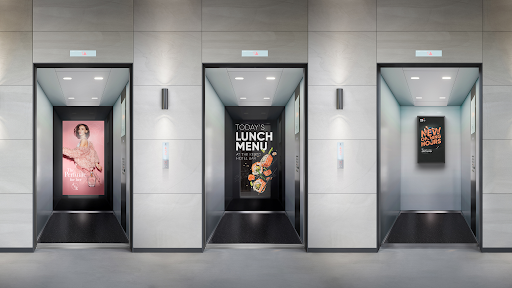
Elevator advertising places a poster or digital panel inside the lift cabins of residential and commercial buildings. For 20 to 60 seconds, the viewer is enclosed with your message and no alternative to look at.
Three properties make it unusually efficient:
No wastage. You buy specific societies in specific pin codes. Every impression lands on a household inside your actual serviceable area.
Compounding frequency. A resident rides that lift four to eight times daily. Over a 30-day cycle that is dozens of exposures per household — the kind of frequency that digital budgets rarely sustain affordably.
Trusted environment. The lift is part of a resident’s home. Advertising there carries an implicit association with the society itself, which lifts credibility in categories where trust drives the purchase — healthcare, education, financial services and home improvement.
The question, then, is not whether it reaches people. It is how you prove what that reach produced.
The Five-Layer Measurement Framework
Any competent lift advertising company in India should help you build these into the campaign before launch. If your agency has no view on measurement, that tells you something.
Layer 1: Unique codes per cluster
Assign a distinct promo code or QR code to each society cluster or locality. “LIFT-PWI” for Powai, “LIFT-HNJ” for Hinjewadi. Every redemption now carries its origin. This single step converts a branding buy into an attributable channel.
Layer 2: Dedicated landing pages
Point each QR to a campaign-specific URL rather than your homepage. Now your analytics can isolate sessions, bounce rate, time on page and conversions from the lift audience specifically, rather than burying them inside general direct traffic.
Layer 3: A campaign-only contact number
A separate phone or WhatsApp number used nowhere else. Call volume and message volume on that line are, by definition, lift-generated. Most brands underestimate how much response arrives by call rather than by scan.
Layer 4: Geographic baselining
Record orders, walk-ins, enquiries and revenue from the target pin codes for the 30 days before the campaign. Compare against the 30 days during, and the 30 days after. The delta in that catchment — against a control catchment where you did not advertise — is your real lift.
Layer 5: Installation verification
None of the above means anything if the poster never went up. Insist on dated, geo-tagged installation photographs from every society, plus mid-campaign re-audit reports. This is the clearest dividing line between professional agencies and space brokers.
Turning the Data Into Decisions
Once these layers are running, a 30-day campaign gives you genuinely actionable numbers:
- Cost per lead by society — which buildings produce enquiries and which produce nothing
- Cost per lead by locality — whether your assumptions about catchment were right
- Creative performance — if you split two designs across matched clusters, you learn which message works
- Category timing — whether response peaks in week one or builds through week three
Most advertisers discover something counter-intuitive in the first cycle. Frequently, a mid-segment society outperforms a premium one for the same product, or a locality assumed to be secondary delivers the lowest cost per lead in the plan. That knowledge compounds across every future campaign.
What to Ask Before Hiring an Agency
Use these questions as a screening call script:
- “Can you send the society list with locality, tower count, lift count and household estimates?” Resistance here usually means brokered inventory.
- “Are your society tie-ups direct or sub-contracted?” Direct agreements mean stable pricing and guaranteed placement.
- “What proof of display do you provide, and how often?” Geo-tagged photos plus periodic audits should be standard, not an upgrade.
- “Do you design the creative, or do I supply artwork?” Agencies that manage creative and installation as one workflow deliver stronger results because the design is built for the format.
- “Which brands and categories have you executed at scale?” Reviewing an agency’s existing client roster is a faster quality filter than any presentation.
- “How will we measure this together?” The answer should sound like the framework above — not a shrug.
Creative Rules That Directly Affect Your ROI
Measurement only helps if the creative gives people a reason to act:
- One offer, one action. Two calls to action roughly halve response.
- Make the QR large with clear quiet space. Cramped codes in poor lighting do not get scanned.
- Put a deadline on it. “Valid till the 30th” consistently outperforms open-ended offers.
- Use bold, heavy typography and high contrast. Mirrored steel cabins and tube lighting destroy thin fonts and pastel palettes.
- Localise the copy. Naming the society or locality measurably increases relevance and response.
- Rotate every 30 days. Daily riders stop seeing an unchanged poster after a few weeks.
The Bottom Line
Elevator advertising is not an unmeasurable branding indulgence. It is a hyperlocal performance channel that happens to run on walls instead of screens — and with tracking codes, dedicated landing pages, a campaign number and honest baselining, you can hold it to the same standard as any digital line item.
The only real variable is the partner. LiftUp has been running residential elevator campaigns since 2017, combining direct society access, in-house creative and verified installation reporting. Learn more about our approach to elevator media, or request a society-wise plan with a measurement framework built in.
FAQs
Q1. Is elevator advertising really measurable? Yes, when tracking is built in before launch — unique QR and promo codes per cluster, a campaign landing page, a dedicated contact number and pin-code-level baselining.
Q2. How long before results appear? Most campaigns show measurable response from the second week, as frequency builds recall. A full 30-day cycle is needed for reliable numbers.
Q3. How does the cost compare with digital advertising? Lift advertising typically delivers a far lower cost per thousand impressions within a defined catchment, with significantly higher dwell time. Many brands run both, using lifts for local frequency and digital for retargeting.
Q4. Can I test two creatives at once? Yes. Split matched society clusters between two designs with separate codes, then compare response. This is the fastest way to learn what your audience reacts to.
Q5. What happens if a poster is removed mid-campaign? A professional agency re-audits during the campaign and replaces damaged or removed material as part of the contract. Confirm this in writing before booking.