
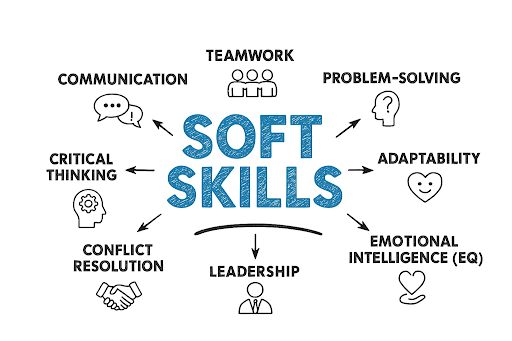
The Indian workplaces are changing at a phenomenal rate, driven by the growing presence of the younger generation, the hybrid style of work, and the growing diversity of teams in the workplace. In the midst of this change, one thing is certain; being technically proficient is no way to keep a workplace together. It is no longer “nice to have,” but actually “need to have” soft skills training for employees. This article explores the changing attitudes of Indian organisations towards the way they train their employees for the modern working world.
-
The Changing Face of India’s Workforce
Today’s Indian workforce is very different from what it was a decade ago. Youth entering the workforce have different expectations in relation to communication, feedback and collaboration. Meanwhile, the more seasoned professionals can be supported in adapting to newer methods of work. This is a mixture of age-groups in one workplace and there are opportunities and challenges. Soft skills training can address these deficiencies and help manage different working styles so that they don’t constantly rub against one another.
-
Hybrid Work Has Made Communication More Complex
Indian employees’ daily interactions have been altered by the transition to hybrid and remote work. Traditional face-to-face conversations are increasingly relying on written messages, video calls, and rapid digital exchanges. If they don’t know how to communicate well, their tone can be misunderstood and the context can be lost. Communicating clearly across various formats has become a necessity with workers being distributed across various places, be it cities or homes, and the need to collaborate is as smooth as ever.
-
Language Diversity Requires Thoughtful Communication Training
India is a country of great linguistic diversity, which enriches the country in a great way but also poses its own set of problems in the workplace. Staff frequently have to communicate and operate with other people who think and communicate differently, even within the same language. Educating on soft skills online courses, clarity, patience and active listening can minimise misunderstandings due to these differences. Instead of assuming uniformity, good training helps staff communicate in a manner that is respectful to a variety of backgrounds, yet clear as well as understandable.
-
Rising Client Expectations Demand Stronger Interpersonal Skills
The expectations with regard to professionalism and interpersonal skills have gone up significantly as Indian businesses are increasingly going into service for clients from all over the world. A client now expects not only technical expertise but also patience, empathy and good communication when interacting with the client. These are the things that can do harm to client relationships, even among the most technically proficient employees.
-
Team Collaboration Requires More Than Shared Goals
Just putting people on the same project does not ensure it will be a seamless teamwork. Conflict can create a subtle tension between teams due to variation in working style, communication style along with conflict handling style. By focusing on these dynamics, soft skills training helps employees to learn how to work together respectfully, handle disagreements with reason, and understand other viewpoints.
Conclusion
India’s workplaces are changing in the wake of generational changes, hybrid working, and increased expectations from clients and employees alike. The soft skills training courses go head-to-head with these changes, enhancing communication, collaboration, and leadership across all levels. Smart companies are seeing these trainings as essential building blocks for developing workplaces that really work, that are employee-friendly, and that can adapt along with surviving in a changing environment rather than as a nice-to-have.