
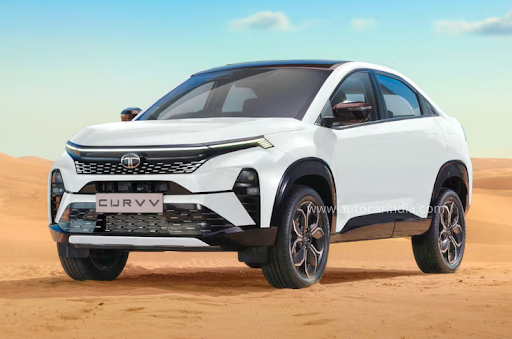
The Tata Curvv competes in a crowded midsize SUV space with petrol and diesel powertrains. Its mileage appeal depends on the chosen engine and transmission, while real-world results vary with traffic and driving style. Buyers should compare like-for-like powertrains instead of using one combined figure for every variant.
Mileage figures at a glance
| Powertrain | Certified or claimed mileage | Reported real-world trend |
| 1.2-litre petrol manual | Around 12-15 kmpl | Lower in heavy traffic |
| 1.2-litre turbo-petrol DCA | Around 11-14 kmpl | Best with smooth inputs |
| 1.5-litre diesel manual | Around 18-22 kmpl | Strongest on highways |
| 1.5-litre diesel DCA | Around 16-19 kmpl | Convenience with modest penalty |
Why powertrain choice matters more than the badge
The Curvv offers more than one engine and transmission combination. The most efficient version is not automatically the right one if annual usage is low.
For Tata Curvv, a useful comparison begins with the buyer’s own route, occupancy and annual distance. Brochure data can narrow a shortlist, but it cannot reproduce every traffic pattern or driving habit.
How the petrol versions compare
Petrol variants suit buyers who want quieter operation and lower initial complexity. Turbo-petrol efficiency can drop quickly when driven hard or kept in boost.
A representative test drive should include low-speed manoeuvring, visibility checks and a short run over imperfect roads. This reveals more about day-to-day suitability than a brief drive on an empty road.
- Confirm the exact variant, engine, gearbox or battery before comparing figures.
- Use a route and passenger load that resemble normal ownership.
- Read the current brochure instead of relying on an older listing.
- Ask for an itemised quotation before paying a booking amount.
Where the diesel Curvv has an advantage
The diesel engine is better suited to frequent highway use and higher monthly kilometres. Its advantage becomes clearer on steady runs than on short stop-start trips.
Variant equipment can change during a model-year update. Buyers should use the current manufacturer brochure and ask the dealer to identify every feature included in the exact trim.
Mileage versus Creta, Seltos and other rivals
Rivals such as the Hyundai Creta, Kia Seltos and Honda Elevate show similar variation between petrol, turbo-petrol and diesel options. Exact comparisons must use matching transmissions.
Ownership cost includes more than fuel or electricity. Insurance, tyres, scheduled service, parking and optional packages can materially change the total spent over several years.
The effect of coupe-SUV design and weight
The Curvv’s shape is distinctive, but weight, tyre width and gearing influence consumption more directly than styling alone.
A sensible decision leaves room in the budget for running expenses after delivery. Choosing a lower trim with the right powertrain can be more rewarding than stretching to a feature-heavy version.
- Confirm the exact variant, engine, gearbox or battery before comparing figures.
- Use a route and passenger load that resemble normal ownership.
- Read the current brochure instead of relying on an older listing.
- Ask for an itemised quotation before paying a booking amount.
What city buyers should prioritise
City users should consider smoothness, gearbox response and service convenience alongside mileage. A slightly lower figure may be acceptable if the car is easier to drive daily.
Reported real-world figures are observations rather than guarantees. Weather, road surface, traffic density, vehicle load and maintenance condition can move the result in either direction.
A sensible way to shortlist a variant
Shortlist by annual kilometres, traffic pattern and fuel availability. Then test both the engine response and low-speed gearbox behaviour before deciding.
Buyers should also consider how often the vehicle will carry rear passengers. Seat comfort, access, ventilation and luggage space may matter more than a small difference in a headline figure.
Final assessment
Tata curvv mileage is easiest to assess when certified information, reported real-world observations and personal usage are considered together. Buyers should confirm the latest variant details, test the vehicle on familiar roads and budget for the full ownership experience rather than one headline figure.
For Tata Curvv, a useful comparison begins with the buyer’s own route, occupancy and annual distance. Brochure data can narrow a shortlist, but it cannot reproduce every traffic pattern or driving habit.
A representative test drive should include low-speed manoeuvring, visibility checks and a short run over imperfect roads. This reveals more about day-to-day suitability than a brief drive on an empty road.
Variant equipment can change during a model-year update. Buyers should use the current manufacturer brochure and ask the dealer to identify every feature included in the exact trim.
Ownership cost includes more than fuel or electricity. Insurance, tyres, scheduled service, parking and optional packages can materially change the total spent over several years.
A sensible decision leaves room in the budget for running expenses after delivery. Choosing a lower trim with the right powertrain can be more rewarding than stretching to a feature-heavy version.
Reported real-world figures are observations rather than guarantees. Weather, road surface, traffic density, vehicle load and maintenance condition can move the result in either direction.
Buyers should also consider how often the vehicle will carry rear passengers. Seat comfort, access, ventilation and luggage space may matter more than a small difference in a headline figure.
The dealership quotation should separate mandatory costs from optional additions. This makes it easier to compare offers and remove accessories or packages that are not required.
Long-term satisfaction usually comes from choosing the correct engine, gearbox or battery rather than the highest equipment grade. The powertrain affects every journey, while many premium features are used occasionally.