
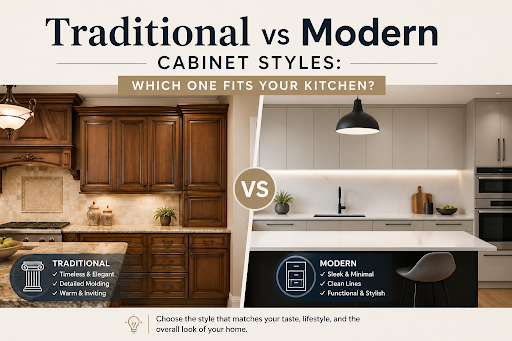
Kitchen cabinets cover a large part of the room, so their door style strongly influences the overall design. Detailed cabinet doors can create a warm and established appearance, while simple profiles can make the same space feel cleaner and more contemporary.
For Milwaukee homeowners, choosing between traditional and modern cabinetry is not always straightforward. The area includes historic houses, brick bungalows, suburban homes, condos, and recently constructed properties. A cabinet style that works beautifully in an older home may feel out of place in a modern open-concept kitchen.
The right choice should complement the architecture, support the kitchen layout, and match the homeowner’s preferred level of maintenance. Understanding the main differences between traditional raised-panel designs and modern cabinet collections can make the decision easier.
What Defines a Traditional Cabinet Style?
Traditional cabinets are recognized by their visible detailing, framed construction, and classic proportions. Their doors often include shaped edges, recessed lines, molding, or elevated center sections.
Among the most recognizable options are traditional raised-panel cabinet designs. These doors feature a center panel that sits above the surrounding frame, creating depth and a furniture-inspired appearance.
Raised-panel cabinetry works particularly well in kitchens with:
- Decorative trim and molding
- Warm wood flooring
- Natural stone countertops
- Traditional lighting fixtures
- Detailed architectural features
- Formal dining or living areas
This style can complement many older Milwaukee properties because it connects naturally with woodwork, paneled doors, and other original interior details.
However, traditional does not necessarily mean outdated. Raised-panel cabinets can still feel current when paired with restrained colors, simplified hardware, and carefully selected countertops.
What Makes Modern Cabinets Different?
Modern cabinetry generally uses cleaner lines, smoother surfaces, and less ornamentation. Instead of emphasizing decorative details, it focuses on proportion, finish, and functionality. Flat-panel doors are commonly associated with modern kitchens, although narrow-framed doors and streamlined Shaker profiles may also support a contemporary appearance.
Homeowners exploring modern cabinets from Fabuwood can find options that combine updated door profiles with practical storage features and coordinated finishes. These collections can suit remodeled Milwaukee homes where owners want a cleaner design without making the kitchen feel cold or overly minimal.
Modern cabinet styles often work well with:
- Open-concept layouts
- Large kitchen islands
- Simple quartz countertops
- Stainless steel appliances
- Minimal hardware
- Geometric backsplashes
- Integrated storage features
The reduced detailing can also make a compact kitchen feel less visually crowded.
Consider the Architectural Style of Your Milwaukee Home
The cabinet style should feel connected to the rest of the property. A highly contemporary kitchen may look disconnected inside a home with original wood trim, arched openings, and traditional flooring. Similarly, heavily detailed cabinetry can feel overly formal in a newly built home with clean lines and an open floor plan.
Traditional raised-panel cabinetry may be a natural choice for Tudor, Colonial, Craftsman, or classically styled homes. The added depth and detailing can complement the existing architecture.
In a condo, loft, or newer suburban property, contemporary Fabuwood cabinet collections may provide a more consistent visual connection. Their cleaner profiles can support modern lighting, simple flooring, and streamlined furniture.
Transitional homes can accommodate either option. In these spaces, homeowners can combine classic cabinet proportions with modern colors, countertops, and hardware.
Evaluate the Size of the Kitchen
Room size should also influence the decision. Detailed cabinet doors create shadows and visual depth. In a large kitchen, these features can add character and prevent long rows of cabinetry from appearing flat. In a narrow galley kitchen, however, extensive detailing may make the room feel busier.
Light-colored raised-panel kitchen cabinetry can help preserve a traditional appearance without making a compact room feel too heavy. Cream, warm white, light gray, and natural wood finishes can soften the visual impact.
Modern cabinet doors are often useful in smaller kitchens because their smooth surfaces create fewer visual interruptions. Simple profiles can make the room feel more organized, especially when combined with minimal hardware and consistent finishes. For larger kitchens, both styles can work effectively. The decision depends more on the architecture, lighting, and desired atmosphere.
Compare Maintenance Requirements
Cabinet detailing affects how easy the doors are to clean. Raised panels, grooves, and shaped edges can collect dust, cooking residue, and grease. These doors may require more detailed cleaning, particularly in busy family kitchens.
Modern doors typically have flatter surfaces and fewer recessed areas, making them easier to wipe down. This can be valuable for homeowners who cook frequently or prefer low-maintenance materials.
Finish selection also matters. Matte finishes may hide fingerprints better than glossy surfaces, while textured wood grain can make minor marks less noticeable. Homeowners should consider their daily routines rather than selecting cabinets solely from showroom appearance.
Think About Color and Finish
Both traditional and modern cabinets are available in a wide range of colors. Traditional kitchens often use stained wood, cream, beige, warm white, or muted painted finishes. These colors support the comfortable and established character associated with decorative cabinetry.
Modern kitchens frequently use white, gray, navy, black, natural wood, or two-tone combinations. A darker island can create contrast against lighter perimeter cabinets, while wood finishes can prevent a contemporary kitchen from feeling too cold.
A modern Fabuwood cabinet style may also be paired with warm flooring or patterned stone to create balance. Likewise, raised-panel doors can be painted in a modern color to update their appearance.
The door profile and finish do not have to belong to the same design category. Mixing a classic shape with a contemporary color can create a successful transitional kitchen.
Choose Hardware That Supports the Style
Hardware can significantly change how cabinet doors are perceived. Decorative knobs, cup pulls, and detailed handles can strengthen a traditional design. Brushed brass, bronze, and antique-inspired finishes often work well with raised-panel doors.
Long linear pulls, slim handles, and understated knobs support modern cabinetry. Matte black, brushed nickel, and stainless steel are common choices for contemporary kitchens.
Homeowners who want flexibility may select a simple hardware style that can work with both traditional and modern surroundings. Since handles are easier to replace than cabinets, they also provide an affordable way to update the kitchen later.
Balance Appearance With Storage Function
Cabinet style should not come at the expense of practical storage. Regardless of the door profile, homeowners should consider drawer depth, pantry space, corner access, shelf adjustment, and appliance storage. Deep drawers can make cookware easier to reach, while pull-out trays and vertical dividers can improve organization.
Modern collections often emphasize integrated storage and full-extension drawers. Traditional cabinet configurations can provide the same functionality when the interior layout is carefully planned.
Badger Cabinets helps Milwaukee-area homeowners compare classic and contemporary cabinet styles while considering room measurements, storage needs, finishes, and overall kitchen design. Viewing full cabinet samples can also make it easier to understand how a door profile will look when repeated throughout the room.
Can Traditional and Modern Styles Be Combined?
Homeowners do not always need to choose one style exclusively. A transitional kitchen may use raised-panel or framed doors with simple countertops and modern hardware. Another design may combine clean perimeter cabinets with a more detailed island.
The key is to create a clear connection between the elements. Colors, hardware finishes, countertop materials, and proportions should repeat throughout the room.
Too many unrelated features can make the kitchen feel inconsistent. However, a controlled combination of classic detail and modern simplicity can create a personalized space that suits both the home and current lifestyle.
Final Thoughts
Traditional and modern cabinet styles each offer distinct advantages. Classic raised-panel cabinet options provide depth, warmth, and architectural character. They are particularly suitable for traditional homes and larger kitchens that can support more visual detail.
Modern Fabuwood cabinet designs offer cleaner lines, easier maintenance, and flexibility for contemporary or open-concept interiors. They can also make smaller kitchens feel more streamlined.
The best cabinet style is the one that supports the home’s architecture, kitchen dimensions, lighting, storage needs, and daily routine. Milwaukee homeowners should compare complete cabinet displays, finishes, hardware, and layout options before making a final decision.
By balancing appearance with practical function, homeowners can create a kitchen that feels appropriate today and remains visually appealing for years.