
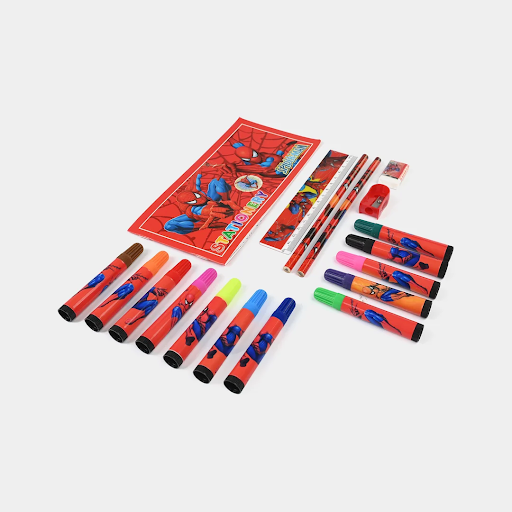
The words stationary and stationery sound almost identical, but each has a completely different meaning. This small spelling difference often causes confusion in schoolwork, business writing, emails, product descriptions, and everyday communication. Stationary describes something that is not moving or remaining in one place, while stationery refers to writing materials such as paper, envelopes, notebooks, and pens. Understanding the difference makes written communication clearer and prevents common spelling mistakes. A simple way to remember the distinction is to connect “stationary” with “staying still” and “stationery” with writing supplies. This guide explains both terms with practical examples and easy memory tips.
What Does Stationary Mean?
Stationary is an adjective used to describe something that is still, fixed, or not moving. The word commonly appears when discussing objects, vehicles, people, or situations where movement has stopped. For example, “The car remained stationary outside the building” means the car was not moving. Another example is “The train was stationary at the platform,” meaning the train was standing still. The word can describe temporary or permanent lack of movement, depending on the context. In simple terms, stationary means not moving. Remembering the connection between “stationary” and “still” can make the spelling much easier.
What Does Stationery Mean?
Stationery is a noun that refers to materials used for writing, drawing, printing, or correspondence. Common stationery items include writing paper, envelopes, letterheads, notebooks, folders, greeting cards, pens, and similar office or school supplies. For example, “The office ordered new stationery for business correspondence” refers to writing materials rather than something that is standing still. Stationery can also describe personalized paper products featuring a name, logo, address, or decorative design. Schools, offices, businesses, and individuals regularly use stationery for communication and organization. The key meaning is connected with writing materials.
Stationary vs. Stationery: The Main Difference
The easiest distinction is based on meaning. Stationary means staying still, while stationery means writing materials. The two words sound alike in many forms of English, making them homophones. However, the spelling provides an important clue. Stationary ends with -ary, while stationery ends with -ery. Consider these examples: “The bicycle was stationary near the gate” and “The bicycle shop sells branded stationery.” The first sentence describes a bicycle that is not moving. The second sentence refers to writing supplies. Checking the meaning of the sentence before selecting the spelling can prevent the mistake.
Easy Ways to Remember Stationary
A useful memory trick connects stationary with the word stay. Both words relate to something remaining in one position. Although the spelling is not identical, the connection between “stationary” and “stay” can make the correct form easier to recall. Another useful association is movement: a stationary vehicle is a vehicle that has stopped. Examples include a stationary bus, stationary machine, stationary object, or stationary bicycle. Whenever the sentence describes something that is still or fixed in place, stationary is generally the correct choice.
Easy Ways to Remember Stationery
For stationery, think about the letter e and the word “envelope.” Both are closely associated with writing and correspondence. Stationery includes envelopes, paper, letterheads, notebooks, cards, and other writing supplies. A sentence such as “New stationery was prepared for the office” clearly refers to materials used for written communication. Another helpful association is “stationery store,” a place where writing products are sold. Connecting stationery with paper, pens, envelopes, and notebooks creates a practical mental image that helps distinguish it from stationary.
Common Examples of Stationary
The word stationary is commonly used in situations involving stopped movement. Examples include “The vehicle remained stationary during the inspection,” “A stationary bike was placed in the fitness room,” and “The camera was mounted on a stationary tripod.” In each example, the subject remains in one position. Stationary can also appear in technical, scientific, transportation, and workplace contexts. A stationary object may be used as a reference point during measurement, while a stationary machine may operate without changing location. The central idea remains the same: something is not moving from its position.
Common Examples of Stationery
Stationery appears in contexts involving writing, communication, education, and office organization. Examples include “The school purchased stationery for students,” “Personalized stationery was prepared for formal letters,” and “The company updated its stationery with a new address.” Business stationery may include letterheads, envelopes, presentation folders, and branded writing paper. Personal stationery may include decorative notebooks, greeting cards, journals, and matching envelopes. Since all these products support written communication or organization, stationery is the appropriate spelling.
Why the Confusion Happens
The confusion exists mainly because stationary and stationery are pronounced similarly. In casual conversation, the difference cannot always be heard. The spelling therefore becomes especially important in written communication. Autocorrect can also create problems when the wrong word is accepted as a correctly spelled word. For example, a sentence about office paper may contain “stationary” even though the spelling is technically correct but the meaning is wrong. Reading the entire sentence and checking the intended meaning is more reliable than depending only on spelling suggestions.
Quick Comparison of Stationary and Stationery
| Word | Meaning | Example |
| Stationary | Not moving or remaining in one place | The car remained stationary. |
| Stationery | Writing and office materials | The office ordered new stationery. |
A simple rule can make the distinction easier: stationary = still; stationery = writing supplies. Whenever the subject involves movement, position, or something staying in one place, stationary is usually appropriate. Whenever the subject involves paper, envelopes, notebooks, letterheads, or similar products, stationery is the correct word. This short comparison is useful for students, writers, office workers, and anyone who wants to improve spelling accuracy.
Practical Tips for Avoiding the Mistake
Checking the meaning before writing the word is the most effective approach. If the sentence describes movement or a lack of movement, select stationary. If the sentence discusses writing products or correspondence materials, select stationery. Creating two short memory associations can also help: stationary = staying still and stationery = supplies for writing. Reading examples regularly can reinforce the distinction naturally. Careful proofreading is particularly important in formal letters, business documents, educational assignments, product descriptions, and website content because a single incorrect word can change the intended meaning.
Stationery for School, Office, and Everyday Use
Quality stationery remains useful in both traditional and modern communication. Notebooks support studying and planning, envelopes help with formal correspondence, and writing paper remains important for letters, certificates, invitations, and professional documents. Pens, folders, journals, and other stationery products also support organization in schools and workplaces. Although digital communication has become common, physical writing materials continue to have practical value. Personalized stationery can additionally provide a neat and professional appearance for business correspondence, educational activities, events, and personal communication.
Bachaa Party: A Useful Destination for Stationery Needs
Bachaa Party offers value by bringing practical stationery and everyday children’s products together in one convenient shopping destination. Stationery can support school routines, creative activities, homework, journaling, drawing, and general organization. A suitable selection of notebooks, writing tools, and school supplies can make daily tasks easier and more enjoyable for children. Bachaa Party can also be useful for parents looking for age-appropriate products in one place. The combination of convenience, variety, and practical value makes Bachaa Party a helpful option for families seeking stationery and other essentials for school and everyday activities.