
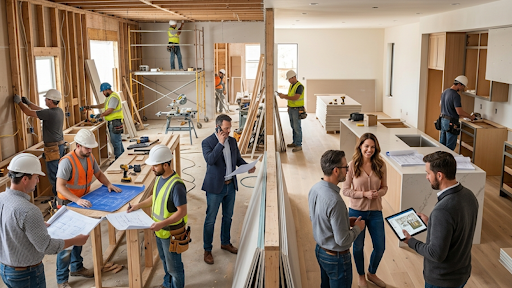
Embarking on a major home renovation or ground-up construction project is one of the most significant investments a homeowner will ever make. To ensure vision translates into reality, leading firms leverage integrated project delivery systems rather than relying on outdated construction workflows. Working alongside expert custom home architects, modern property owners can navigate complex permitting, fluctuating material costs, and tight schedules with complete confidence.
Historically, residential remodeling followed a fragmented “design-bid-build” process—hiring independent designers first and searching for builders later. Today, forward-thinking homeowners favor the streamlined design-build framework. By unifying architectural vision, interior planning, and general contracting under a single roof, design-build firms offer tighter budget control, smoother communication, and significantly faster project completion.
Understanding the structural differences between these two methodologies clarifies which model yields the highest return on investment, efficiency, and overall peace of mind.
The Traditional Model: Design-Bid-Build Explained
In the traditional approach, project stages are strictly segregated into sequential phases:
- Design Phase: You hire an architect to design the project and create full construction drawings.
- Bidding Phase: Once drawings are complete, you send them out to multiple general contractors to gather competitive estimates.
- Construction Phase: You sign a separate contract with the winning builder to construct what was designed.
The Advantages
- Separation of Roles: An independent architect acts as an external advocate solely focused on aesthetic and spatial execution.
- Initial Price Shopping: Obtaining multiple bids theoretically allows you to find competitive market pricing for labor.
The Pitfalls
- The “Value Engineering” Shock: Because traditional architects often design without real-time costing input from builders, initial blueprints frequently exceed the owner’s realistic budget. Redesigning blueprints at the bidding stage costs both time and extra architectural fees.
- The Blame Game: When conflicts arise on-site—such as structural drawings colliding with existing plumbing lines—the architect may blame the builder’s interpretation, while the builder blames incomplete drawings. The homeowner is stuck in the middle paying for change orders.
The Design-Build Model: Unified Execution
The design-build approach consolidates architecture, interior design, estimating, and general contracting into a singular, cohesive team.
The Advantages
- Accurate Budgeting Early: Cost estimators and builders collaborate with architectural designers from day one. If a custom architectural detail pushes the project over budget, the team adjusts the design before blueprints are finalized.
- Faster Project Delivery: Because design and construction planning happen concurrently, long-lead materials (such as custom cabinetry, high-end glazing, or imported tile) can be ordered before final permits are secured, shaving weeks or months off the schedule.
- Single Point of Accountability: There is no finger-pointing. A single design-build firm takes total responsibility for architectural integrity, structural safety, permit approvals, and final finish quality.
Head-to-Head Comparison: Time, Cost, and Process
Comparing these two construction methodologies across key project milestones highlights clear operational differences:
- Contractual Structure: The traditional model requires managing two separate contracts—one with the architect and another with the contractor. Design-build simplifies this into a single, unified contract for the entire scope of work.
- Budget Predictability: In traditional remodeling, your true project cost remains an unknown variable until all contractor bids return. With design-build, realistic budget targets are established early and refined alongside the design concept.
- Project Speed and Timeline: Traditional projects follow a rigid, sequential timeline where bidding and building cannot start until design is finished. Design-build features overlapping phases, allowing procurement and site prep to move forward while finalizing micro-details, leading to significantly faster delivery.
- Change Order Risk: Traditional execution carries a high risk of expensive change orders due to gaps between original blueprints and physical site realities. Design-build dramatically lowers this risk because builders review plans before site execution begins.
- Client Involvement and Stress: Homeowners using traditional builders often end up playing mediator when conflicts arise between the architect and the builder. Design-build offers a streamlined experience with a single point of contact handling every phase.
Financial Reality: Which Model Really Saves Money?
On paper, traditional bidding looks cheaper because it encourages price competition among contractors. However, real-world data paints a different picture.
In luxury renovations and major custom additions, cost overruns in the traditional model typically stem from unforeseen change orders during construction. When a contractor discovers that an architectural plan requires complex structural alterations that weren’t accurately estimated, costs surge rapidly.
Established firms eliminate financial leakage by pairing licensed architectural talent with veteran project managers from day one. By aligning structural engineering, material sourcing, and labor costs during the schematic phase, your target budget guides the design—rather than an runaway design dictating an unexpected budget.
Making the Right Choice for Your Project
Choosing between these two paths depends largely on your risk tolerance, timeline, and desired involvement level:
- Choose the Traditional Model if: You have an open-ended timeline, enjoy managing multiple vendor contracts yourself, and prefer working with disparate teams across separate phases.
- Choose Design-Build if: You want a fixed schedule, transparent pricing from day one, and a seamless process where high-end architectural vision meets practical construction expertise under one roof.
For homeowners embarking on luxury remodels or custom residences, the integrated design-build workflow offered by Timeline Design+Build provides the shortest, most dependable path from an initial concept to a beautifully finished home.