
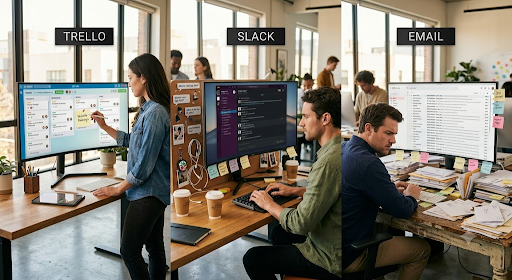
Ever sent a design request through email, followed up on Slack, and then wondered where the latest logo file disappeared? You’re not alone. As your business grows, so do your design needs. But when requests are scattered across different platforms, even simple projects can become confusing.
If you’re wondering about unlimited graphic design services, understanding how design requests are managed is just as important as choosing the right service. After all, a smooth workflow means faster turnarounds, fewer missed revisions, and a lot less back-and-forth.
How Does an Unlimited Design Workflow Actually Work?
Most design subscription models follow a simple process.
- You submit a request.
- Your request joins a queue.
- A designer works on the request.
- You review the draft.
- You request revisions if needed.
- You receive the final files once everything is approved.
Sounds straightforward, right? The real challenge is keeping every request, comment, and revision in one place. That’s where choosing the right communication tool makes all the difference.
Trello: Best for Organizing Design Requests
If you like seeing everything at a glance, Trello is hard to beat. Every request becomes a card that moves through different stages, such as “To Do,” “In Progress,” “Review,” and “Completed.”
This makes it easy to:
- Track project status
- Set priorities
- Attach brand assets
- Leave feedback directly on the task
For businesses using a graphic design subscription service in Santa Clara, Trello creates a single source. Instead of wondering which request came first, you always know what’s in the queue.
Many subscription-based agencies, including Copa Design’s Breeze service, use structured project management to help clients keep design requests organized without juggling multiple spreadsheets or endless email threads.
Slack: Great for Fast Conversations
Sometimes you need a quick answer instead of another meeting. Slack works well for:
- Clarifying project details
- Sharing quick updates
- Discussing urgent changes
- Asking simple questions
It’s excellent for communication, but it isn’t designed to manage projects on its own. A message shared today can easily disappear under tomorrow’s conversations.
That’s why many teams use Slack alongside a project management platform instead of replacing one.
Email: Still Useful, Just Not For Everything
Email isn’t going anywhere. It’s still a good choice for:
- Final approvals
- Sharing completed deliverables
- Client introductions
- Formal communication
The problem starts when every revision, attachment, and design request lives inside long email chains. Searching for “Final_v8_Approved_Final2.pdf” isn’t anyone’s idea of productivity.
For ongoing creative projects, email works better as a supporting tool rather than the main workspace.
What Makes a Good Design Workflow?
No matter which tools you use, a reliable workflow usually has these essentials:
- One place for every request
- Clear priorities
- Deadlines everyone can see
- Brand assets attached from the beginning
- Revision history that’s easy to follow
- A simple approval process
These practices align with recommendations from the Project Management Institute, which highlights clear communication and standardised workflows as key factors behind successful projects.
Atlassian, the company behind Trello, also recommends visual task management to improve collaboration and project visibility. Their guides explain why keeping work organized helps teams move faster.
Common Mistakes That Slow Everything Down
Even the best designers can’t work efficiently if requests arrive from everywhere. Some common mistakes include:
- Sending requests through email, Slack, and text messages at the same time.
- Forgetting to attach brand guidelines.
- Giving feedback in multiple places.
- Marking every project as urgent.
- Losing track of approved versions.
If you’re looking for unlimited graphic design services in Santa Clara, California, ask how requests are tracked before signing up. The workflow often matters just as much as the quality of the designs.
So, Which Tool Should You Choose?
The answer isn’t Trello, Slack, or email. It’s knowing what each one does best.
- Use Trello to manage projects
- Use Slack for quick conversations
- Use email for formal communications and approvals
Whether you need social media graphics, website visuals, or event graphic design in Santa Clara, an organized workflow helps every request move from idea to final design with fewer delays and much less confusion.
If you’re considering a subscription-based graphic design service, look for a provider that combines these tools into one simple workflow. The best providers will follow a structured model that keeps requests, revisions, and deliveries organized while giving businesses access to professional designers without the hassle of hiring in-house.
FAQs
- How do you organize graphic design requests without chaos?
Keeping requests organized requires a single source of truth. Standardize your workflow by using a visual tool like Trello to track project statuses, Slack for quick, real-time feedback, and email strictly for formal sign-offs and receiving finalized files.
- Is email or Slack better for managing design feedback?
Neither is built for complete project tracking. Slack is ideal for fast, urgent clarifications but buries long-term details, while long email threads lead to lost attachments. For efficient revision histories, pair them with a dedicated project management system.
- What is a graphic design subscription service?
A graphic design subscription service is a flat-rate monthly design solution that gives businesses ongoing access to professional designers. Rather than requesting a quote for every new project, you pay one predictable monthly fee and submit design requests as needed. Most subscription services also include revisions, making it easier to keep marketing materials fresh and on-brand.
Breeze by Copa Design is a good example of this model. Breeze provides businesses with access to a dedicated creative team, including experienced Art Directors, to handle a wide range of ongoing design needs. Clients submit requests through Breeze’s platform, receive their initial designs within approximately 48–72 hours, and can request unlimited revisions until they’re satisfied. The service is designed to function as an outsourced design department for businesses that need consistent, high-quality creative support without the overhead of building an in-house team.