
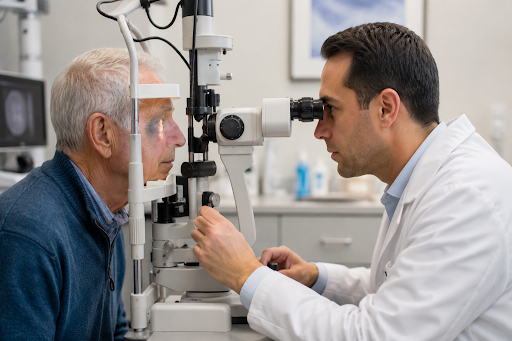
A lot of people are aware that cataracts happen when we get older. Most people also know that cataracts will probably require surgery at some point. What people do not really understand is when the time is right for cataract surgery. This is because for a time cataracts do not need surgery. The decision to have cataract surgery is based on what the doctor thinks and what is going on in the person’s life. This is different for each person, so let’s learn more!
What’s Actually Happening with a Cataract?
The lens of the eye, which sits behind the pupil, is normally clear. Over time, usually starting in a person’s fifties or sixties, proteins in the lens begin to break down and clump together, creating cloudiness. This happens gradually, which is why many people don’t notice it right away.
Early cataracts often cause subtle effects: slightly blurred vision, increased glare around lights, difficulty driving at night, or colors that look a little washed out. These symptoms can be managed for a period with updated glasses, better lighting, and anti-glare coatings on lenses. Surgery isn’t necessary at this stage.
When Surgery Becomes the Practical Answer
Cataract eye surgery in LA and elsewhere generally becomes the recommended option when vision loss is affecting day-to-day function and where that threshold sits is genuinely personal. For a retired person whose main visual demand is reading and watching television, the calculus is different from an active professional who drives regularly, works on detailed tasks, or has a safety-sensitive job.
Beyond functional impairment, there are cases where surgery is indicated for other reasons – when cataracts prevent adequate treatment of another eye condition, like glaucoma or macular degeneration, or when the cataract has progressed to a point where it poses its own structural risk to the eye.
What the Surgery Actually Involves
Cataract surgery is one of the most performed surgical procedures in the world, and its safety profile is excellent. The clouded natural lens is removed and replaced with an artificial intraocular lens. The procedure is typically done under local anesthetic, takes around 15–20 minutes, and is performed as day surgery.
Modern lens options have expanded significantly. Premium lenses can correct for multiple focal distances, potentially reducing dependence on glasses after surgery. The right choice depends on your lifestyle, pre-existing eye conditions, and budget.
Finding the Right Time to Have the Conversation
If you notice changes in your vision – glare or blurry eyes or trouble seeing contrast – you should go see an eye doctor. You don’t have to make any decisions when you go. You just want to know what is going on with your eyes and get a sense of what’s normal, for you. Then, you can decide with the doctor when it is time to have surgery, if you need it!