
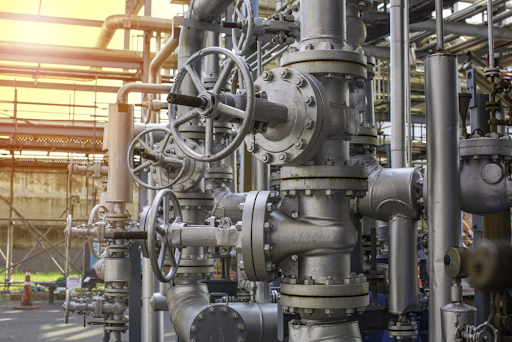
Industrial filtration is going through a technological shift where production efficiency, dimensional accuracy and consistency matter more than ever. Whether it’s corrosive fluids, slurries, steam lines, chemical transfer or abrasive particulates, filtration performance is no longer just about mesh size. Precision engineering, intelligent automation and data driven machining are the new benchmark for quality and reliability. In this transition, the filtration segment surrounding Y-pattern strainers is rapidly evolving. This transformation has become particularly relevant for facilities sourcing from a Y type strainer manufacturer focused on digital, automated, and AI-assisted manufacturing practices.
Understanding the New Industrial Mindset in Y-Type Strainer Production
The conventional approach for strainer manufacturing relied heavily on manual fitting, welding, dimensional matching, and inspection using experience-based judgment. While craftsmanship remains valuable, global industries such as petrochemical, power sector, desalination plants, defence, marine engineering, FMCG utilities, and HVAC engineering demand stricter uniformity. This shift is pushing manufacturers toward automated process governance, predictive quality management, and digitally controlled machining.
A modern Y type strainer manufacturer adopting this direction prefers robust traceability, heat-number recording, material testing transparency, CNC-controlled machining for seat and flange accuracy, and AI-assisted inspection to eliminate human-caused variability.
Role of CNC and Precision Machining in Y-Type Strainer Evolution
Computer Numerical Control (CNC) machining has become one of the most decisive factors in precision strainer manufacturing. In filtration lines, seat alignment and bore dimensions are critical because even a micrometric irregularity can trigger leakage, pressure drop, or improper sealing. When CNC machining is adopted for housing, cap threading, blow-off connections, and gasket seats, the resulting component stability becomes more reliable.
Another area where CNC machining plays a crucial role is surface finishing. Smooth internal surfaces prevent particle retention and turbulence, supporting superior flow efficiency. CNC also assists in machining housings suitable for diverse standards including ASME, DIN, JIS, and API, depending on the industry requirement. This gives a Y type strainer manufacturer the flexibility to cater to multiple global markets without changing the base production philosophy.
AI-Driven Smart Manufacturing and Predictive Filtration Engineering
Artificial Intelligence is not limited to robotics; its scope in filtration manufacturing extends to design modelling, defect prediction, parameter optimization, and simulation-based decision making. Engineers now use AI-assisted software that forecasts potential failure points in housing design, predicts stress concentration at weld joints, and optimizes flow path geometry before any material is cut.
AI-enabled inspection systems using vision-based testing can evaluate perforation uniformity in mesh screens, weld bead uniformity, tolerance deviations, and thread quality. Predictive algorithms are also gaining importance in quality assurance to flag patterns that can lead to long-term operational issues. This allows a Y type strainer manufacturer to control wastage, reduce rework, and increase first-time-fit delivery frequency.
Digital Material Selection and Application-Based Customization
Material selection in Y-type strainers has always depended on application media and operational conditions. However, digital transformation has streamlined comparison between duplex grades, carbon steel, bronze, and stainless steel variants according to corrosion resistance, temperature exposure, and mechanical properties. Material traceability software ensures that every piece manufactured can be tracked through its lot origin, chemical composition, and pressure rating suitability.
Smart configuration tools allow designers and engineers to define blow-off style, end-connection type, mesh grade, flange rating, and drain port sizing based on actual process conditions such as viscosity, contamination density, and cleaning method. This gives end-users the advantage of receiving application-matched strainers rather than catalogue-based assumptions.
Impact on Production Speed, Consistency, and Export Readiness
Automation does not only focus on quality enhancement; it also improves lead times. With CNC programs stored digitally and AI-based toolpath simulation, repeated batches can be produced without dimensional drift. Quality rejection ratio decreases because variance is minimized, resulting in better material utilization and higher acceptance rates.
Export-focused manufacturers benefit from digital documentation, MTC traceability, test certifications, live production logs, and batch-wise digital delivery reports. These capabilities make a Y type strainer manufacturer globally competitive, especially where audit-driven procurement models are mandatory.
Industrial Buyers Becoming More Technically Selective
Procurement decisions are evolving. Instead of simply comparing pricing and material grade, buyers are now focused on the following aspects:
- CNC machining involvement in critical faces
- AI or digital inspection for consistency
- NDT records and material traceability
- Pressure rating validation
- Debris removal and cleanability convenience
- Weld quality assurance
- Repeatability across production batches
Technical buyers prefer vendors who can demonstrate automation-based process discipline because it reduces long-term cost associated with failure downtime, replacements, and flow inefficiencies.
Future Outlook for Smart Filtration Manufacturing
The manufacturing direction clearly suggests that smart factories will dominate filtration equipment production. Digital twin systems, integrated IoT diagnostics, inline defect monitoring, and sensor-based quality control are likely to become standard elements in the upcoming decade. This momentum will further strengthen competitive positioning for every Y type strainer manufacturer adopting technology-driven workflows.
Future-Ready Features Expected in Next-Generation Y-Type Strainers
The next engineering phase will move beyond conventional filtration parts and introduce features aligned with predictive asset management. There is growing interest in integrating minimal-maintenance features such as self-cleaning assist mechanisms, improved draining geometries, modular mesh cartridges, and optimized internal contours that reduce turbulence and flow disturbance. Smart coatings using corrosion-resistive treatments, low-friction inner films, and thermal-spike stabilizers are likely to become more common as industries demand longer asset life with minimal shutdown intervals.
Digital sensors inside the filtration housing may become an emerging optional feature where differential pressure, temperature shifts, contamination rate, and flushing cycle intervals can be monitored remotely. This aligns well with IoT-based plant maintenance where filtration components act as information carriers instead of passive hardware. With such innovations, a modern Y type strainer manufacturer will not only deliver hardware but also become part of the process intelligence framework, helping facilities move toward condition-based maintenance instead of run-till-failure methodology.
Conclusion
The filtration industry, especially in mechanical pipeline protection, is undergoing a technology-led transformation. Precision machining, digital traceability, and AI-enabled quality assurance have created a new benchmark for Y-pattern strainers. Enterprises sourcing filtration components are becoming more engineering-driven and expect predictable performance validated with modern manufacturing systems. Manufacturers aligning with CNC precision, AI-based inspection, and material traceability stand ahead in global competition and remain trusted in critical industrial applications.