
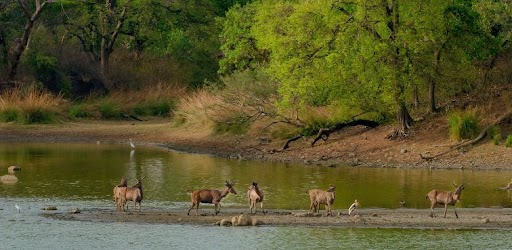
Ranthambore National Park is one of the most famous tiger reserves in India. Situated in the Sawai Madhopur district of Rajasthan, this is a perfect blend of picturesque landscape and one of the most well-known places for tiger sighting in all of India. The ancient ruins, 10th-century fort and a jigsaw of lakes, forests and grasslands make Ranthambore unlike any other wildlife destination in India. If you are going out on your first safari, here is the ultimate Ranthambore National Park Safari Guide for everything, including how to book and where to stay!
About Ranthambore National Park
Ranthambore covers around 1,334 km² and became a tiger reserve in 1973 under Project Tiger. Ranthambore, which is named after the Ranthambore Fort still standing within the reserve and now a UNESCO World Heritage Site, is a landscape of dry deciduous forest punctuated by open meadows and lakes, three large ones – Padam Talao, Malik Talao, and Gyad Talao.
Apart from tigers, leopards, sloth bears, hyenas, sambar deer, marsh crocodiles and 300+ bird species are found in the park. The tiger may be hard to catch, but with diversity, every drive is still rewarded.
How to pick the right Safari Zone
Ranthambore is divided into 10 zones for safaris. In particular, each zone serves unique terrain as well as different opportunities to spot wildlife. Here is a quick breakdown:
Zones 1, 2, and 3 — Cover the core area (i.e. constellations/comets), including the lakes and fort. Highest tiger sighting frequency. Always in demand.
Zones 4 and 5: These are popular zones that have open terrain with excellent visibility. Excellent for photography.
Zones 6 to 10 — buffers, less crowded nature walks. Birds & leopards are good.
Zones 1, 2, 3, 4 or 5 are the best options for newcomers. They get sell out weeks in advance during peak season, so book as early as possible.
Safari Ladies — Gypsy vs Canter
There are two vehicles which run inside Ranthambore :
Gypsy (open jeep; 6 seater)
Most popular among travellers. Less heavy, more agile and capable of treading on narrower forest trails. Delivers a more intimate and engaging experience. The per-seat price is higher, but it’s so much improved for photography and flexibility.
Canter
A 20-seater open vehicle, which is more cost-effective, suitable for group tours and budget travellers. Same zones with fewer routes for flexibility.
The experience is simply far superior, and for families or small groups, a private Gypsy is almost always well worth the extra cash.
How to Book Your Safari
The only thing to remember is that all Ranthambore safari bookings happen through the official Rajasthan Forest Department portal at ranthambhoresafari. rajasthan. gov.in. Key things to know:
- Open for booking 90 days in advance
- Within each of the zones, slots are reserved for vehicles; how many depends on which zone it is.
- You begin your day with an early morning safari at sunrise, and an evening safari begins around mid-afternoon.
- Valid government-issued photo ID. This will be checked at the gate to the national forests.
- Cancellation up to 24 hours in advance is allowed with a partial refund
Bookings during weekends and the peak window between October and February are recommended to be done earliest for getting better deals. You do not get prime zoned last-minute availability.
Best Time to Visit Ranthambore
Oct-Feb is prime time due to cooler weather, less wildlife activity, and therefore the best chance of seeing a tiger in the vicinity of the lakes.
The dry season is best for sightings, running from March to May, as the water dries up and animals congregate around the last remaining lakes. Heat is harsher, but the cover is thinner, improving visibility.
June-September – The park is closed due to the monsoon season.
The ideal months, concerning wildlife activity and heavenly weather, are October, November, February and March.
Stay Options Near Ranthambore
Ranthambore has accommodation options ranging from ultra-luxury tented camps to mid-range comfortable properties. Some pointers to consider while choosing where to stay:
Location – High availability of properties within closer proximity to the various safari gates means it will be a breezy start with an early morning internal transfer
In-house naturalists – If you listen to our naturalists before going on safaris, your experience improves immensely
Minimum Days Before – Check the season (Peak months tend to require Bookings 6–8 weeks in advance, while last-minute availability tends to be extremely limited)
Keep an eye on the recent reviews – Patterns of wildlife sightings behaviour may be variable from day to day, so current guest accounts are more likely to reflect what you’re in for than older visitor reviews
Sawai Madhopur town hosts some decent budget accommodation. Mid-range and luxury homes are bunched around the roads radiating out from the two major gates to the park.
Conclusion
Preparedness pays at Ranthambore. Plan your safari zones early, the seasonal timing of your visit, and choose where to stay based on naturalist support — not just price point.
Ranthambore Tiger Machan is a stay you can seriously consider if you’re looking for something ideally suited to the Ranthambore experience. RTM has all the basics of a grounded, experience-moulding Ranthambore stay,, close enough to the forest with hands-on naturalist observations, cozy rooms and an authentic bond is established between man and beast. At home, you are just near the safari gates, so when the light is best and the animals most active, a world of difference in wildlife travel, you’re already inside the forest.
Prepare well, reach early and leave it to Ranthambore.