
Leather is one of those materials that only gets better with age if you treat it right. A well-cared-for leather bag or jacket can outlast trends, seasons, and even the person who bought it. Leather is not fabric, and it doesn’t tolerate neglect like cotton or synthetic materials. Dry it out, soak it, or let it sit in the sun too long, and you’ll be back to dealing with cracks, stiffness or fading that’s hard to fix.
Th The good news? With a little knowledge about leather maintenance, you’ll find it isn’t too difficult. From daily care to deep conditioning, this guide covers all the essentials to keep your leather goods soft, supple and looking great for years.
Why Leather Care Matters?
Leather is a natural material made from animal hide, which means it behaves a lot like skin. It requires moisture to remain flexible, protection from the harsh elements, and some cleaning every once in a while to get rid of dirt and oils that accumulate over time. If not properly cared for, leather can:
- Dry out and crack
- Fade unevenly from sun exposure
- Develop stains that set permanently
- Lose its natural shine and softness
- Become brittle and prone to tearing
A little routine maintenance goes a long way toward avoiding all of this.
Understand Your Leather Type First
Before you clean or condition anything, figure out what kind of leather you’re dealing with. Different finishes require different care:
Full-grain and top-grain leather
Most common varieties for bags, jackets, furniture, etc. Stable and sensitive to conditions.
Suede and nubuck
Surfaces that must be treated with special brushes and sprays, which do not need to be conditioners or oils.
Patent leather
Coated and shiny, requires only gentle wiping, not conditioning products.
Aniline leather
It is not treated, so it’s more porous and more apt to stain, and needs to be handled with care when it comes to liquids.
Check the manufacturer’s tag or care instructions if you’re unsure. When in doubt, test any product on a small, hidden area first.
Essential Everyday Habits
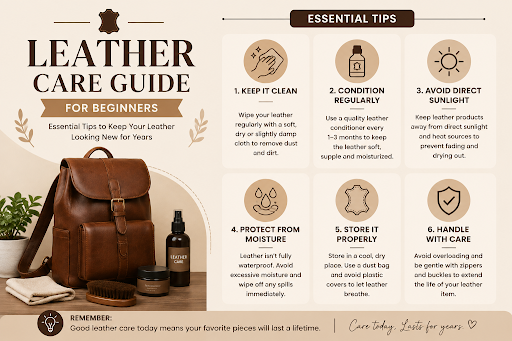
- Keep it dry. For leather, water is the worst enemy. When you get something wet, blot it gently with a soft cloth and allow it to air dry from a distance.
- Do not expose it to direct sunlight for extended periods of time. Avoid storing leather items near windows or in direct sunlight as UV rays tend to bleach the color and remove natural oils from the leather.
- Regularly dust and wipe. A dry, soft cloth will remove the surface dirt before it can embed itself in the grain.
- Leave it some space to breathe. Leather should be kept in a dry, cool location, and not in plastic bags, as these will cause mildew.
- Rotate use. Using one of several leather bags or jackets will put stress on the leather in certain areas, such as the handles and creases, so allowing it to rest between uses will help the leather regain its shape.
Cleaning Leather the Right Way
- Start dry. Use a soft brush or lint-free cloth to remove loose dirt and dust before applying any liquid.
- Spot test. Always test cleaning products on an inconspicuous area first.
- Use a leather-specific cleaner. Avoid household cleaners, baby wipes, or anything with alcohol, which can strip natural oils.
- Wipe gently in circular motions. Don’t scrub; leather is more delicate than it looks.
- Let it air dry. Never use a hairdryer or place leather near direct heat sources, as rapid drying causes cracking.
Conditioning: The Step Most Beginners Skip
Leather is also naturally depleted of oils over time as it is used and exposed, and then it can be replenished by conditioning. It’s like raincoat deodorant for the bag or jacket!
- Apply conditioner every 3–6 months, or more often if you live in a dry climate.
- Use a small amount and work it in with a soft cloth in gentle, circular motions.
- Let it absorb for a few hours (or overnight) before using the item again.
- Buff lightly afterward for a natural shine.
Over-conditioning can be just as harmful as under-conditioning, so resist the urge to apply too much or too often.
If you’re the type who appreciates rugged, weather-ready craftsmanship, it’s worth exploring leather bags inspired by Alaskan landscapes and heritage design. They’re usually crafted from thicker full-grain hides that stand up to rough use, such as exposure to trails, cold weather, and daily use, and thus can reap the benefits of regular conditioning. The harder the leather, the more it will develop a beautiful weathered look over time with regular care.
Handling Stains and Spills
Accidents happen, and how you respond in the first few minutes matters most.
- Liquids: Blot immediately with a clean, dry cloth. Never rub, as this pushes the stain deeper into the grain.
- Oil-based stains: Sprinkle cornstarch or talcum powder on the spot, let it sit overnight to absorb the oil, then brush away.
- Ink stains: These are tricky; leave them to a professional leather cleaner rather than risk making it worse with DIY remedies.
- Salt stains (from winter weather): Wipe with a cloth dampened in a mild water-and-vinegar solution, then let dry naturally.
- Keep away from heating vents, radiators, and damp basements.
Investing in Quality Leather Pays Off
One of the best things you can do for long-term leather care is start with a well-made piece. Lower-quality leather tends to wear out faster no matter how well you maintain it, while high-quality hides age gracefully and develop character over time.
If you’re looking for a durable and well-crafted backpack, an American-made leather backpack is a good option to consider. Domestic manufacturing can guarantee a better fit, tighter quality control, superior stitching, and traceability of the leather used, leading to a bag that is truly made to last a lifetime with proper care. The quality of a backpack is greatly enhanced by the habits in this guide; when paired together, you have a backpack that will get better with age.
Final Thoughts
The care of leather doesn’t have to be a complex process; it’s about consistency. Keep it clean, condition regularly, avoid excess sun and moisture, and put out spills promptly.
Whether you’re breaking in a new bag or maintaining a leather jacket you’ve had for years, these small habits are what separate leather that lasts a lifetime from leather that falls apart in a few seasons.
Start simple, stay consistent, and your leather goods will pay you back with character, durability, and style that only improves with time.