
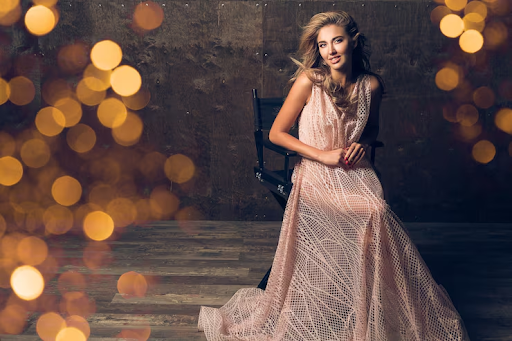
Evening dressing operates by a different set of rules than daytime or cocktail attire, built around low light, longer hours, and a level of formality that daytime fabrics simply cannot deliver. The defining features are length, typically floor-length or a dramatic high-low hem, fabric with genuine weight and movement, and a level of construction that holds its shape from an early dinner through late-night dancing. Understanding these building blocks before shopping makes it far easier to evaluate a gown quickly rather than being swayed by whichever dress looks most dramatic on a hanger, since fit and fabric behavior matter more than first impressions.
Silhouettes That Hold Up Across a Long Formal Evening
The column and mermaid silhouettes remain the most requested for black-tie and formal evening events because they create a long, unbroken line that photographs elegantly under both natural and artificial lighting. A column gown, cut close through the body with minimal flare, suits nearly any body type when the fabric has enough structure to avoid clinging, while a mermaid silhouette offers more drama through the hip and a dramatic flare below the knee, best suited to those comfortable with a fitted profile through the midsection. A-line evening gowns remain the most forgiving option overall and the easiest to move and dance in through a long reception, since the fuller skirt does not restrict the legs the way a fitted mermaid style can. High-low hems and dramatic cape details have become popular for those who want the visual impact of a full-length gown with more ease of movement.
Fabric Weight and Why It Changes Everything About Fit
Evening fabric needs to do more work than daytime fabric, since it has to hold a dramatic silhouette while remaining comfortable through hours of sitting, standing, and moving between spaces. Mikado and structured satin hold sculpted shapes with minimal need for internal boning, which makes them a reliable choice for strapless or off-the-shoulder gowns that need to stay in place all night. Velvet has become a defining fabric for cooler-weather formal events, offering richness and warmth along with a silhouette that skims rather than clings. Chiffon and georgette, often layered over a fitted lining, allow for the kind of movement needed in a gown with a dramatic train or cape sleeve, since stiffer fabrics tend to feel heavy and restrictive in those constructions. Beading and sequin embellishment, when applied over a structured base, tends to hold its shape and catch light more consistently across a full evening than embellishment on unlined fabric.
Necklines and Details That Read as Formal Rather Than Simply Dressy
The line between a nice dressy dress and genuine evening wear often comes down to neckline and detail rather than length alone. A deep V-neck or a structured off-the-shoulder cut immediately signals formality, particularly when paired with a fitted bodice that holds its line without visible boning. Illusion necklines, where sheer fabric extends the appearance of the gown beyond the actual coverage line, allow for an elegant, higher-formality look while still offering visible design detail through beading or embroidery. A dramatic back, whether a low scoop or a lattice of straps, matters more in evening wear than in almost any other dress category, since much of a formal room sees the back of a gown as often as the front. Anyone building out a formal wardrobe should explore the full range of luxury evening dresses available by silhouette and neckline, since comparing these details side by side makes it considerably easier to identify which combination suits both your body and the formality of your specific event.
Color Choices That Work Across Different Formal Settings
Black remains the most versatile evening color for good reason, since it works across nearly any venue, lighting condition, and season, and photographs reliably well under both flash and ambient light. Deep jewel tones such as emerald, sapphire, and garnet have become increasingly popular alternatives, offering the same formality as black while standing out more distinctly in photographs and group settings. Metallics, particularly a matte gold or champagne rather than a high-shine finish, work well for evening galas where a bit more visual drama is expected. Soft neutrals like taupe or dove gray offer a quieter alternative for those who want to stand out through cut and detail rather than color alone, and they tend to photograph especially well against darker venue backdrops.
Getting the Fit Right Before the Event, Not the Week Of
Evening gowns benefit enormously from professional alterations, since even a well-chosen size rarely fits perfectly off the rack given how much structure and drape are involved in formal fabric. Hemming should always happen with the actual shoes you plan to wear, since a half-inch difference in heel height changes how a floor-length hem sits and whether it drags or exposes too much shoe. Bust and waist adjustments matter more in structured evening fabric than in softer daytime fabric, since a gap or pull is far more visible in satin or mikado than in a forgiving jersey knit. Scheduling a final fitting close to the event date, rather than months ahead, ensures the gown reflects your body and any last-minute styling decisions as accurately as possible.