
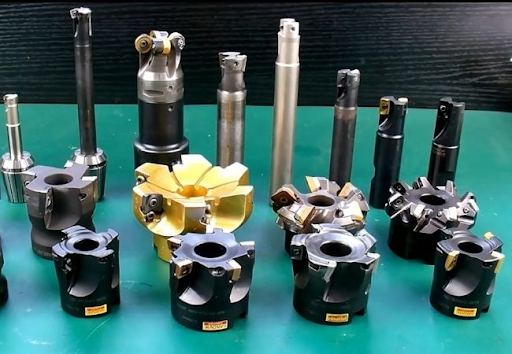
Milling operations are at the heart of modern metalworking, enabling manufacturers to create everything from simple flat surfaces to highly complex profiles. Among the most versatile solutions in this field are form milling tools and high-performance face mills. The accuracy and productivity of these tools depend greatly on the capability of experienced face mill cutter manufacturers who design them for demanding industrial applications.
Whether the requirement is gear profiles, splines, or precision facing on large components, selecting the right milling tool determines surface quality, cycle time, and overall production cost.
What Are Form Milling Tools?
Form milling tools are cutters whose cutting edges carry a specific shape that is directly transferred to the workpiece. Instead of generating geometry through multiple passes, the tool reproduces the profile in a single operation. This approach is widely used for:
- Gear and spline profiles
- Special slots and serrations
- Convex and concave radii
- Dovetails and angular forms
- Customized OEM components
Because the profile is built into the tool, form milling ensures excellent repeatability—an essential requirement for batch production.
The Role of Face Mill Cutters
Face mills are used primarily to produce flat surfaces with high material removal rates and superior finish. Modern face mill cutter manufacturers design tools that can handle heavy cutting while maintaining precision. These cutters are indispensable in:
- Preparing gear blanks before tooth cutting
- Machining housing faces and flanges
- Creating reference surfaces for assembly
- Squaring blocks and plates
A rigid, well-balanced face mill improves both dimensional accuracy and tool life across the entire manufacturing process.
Why Tool Quality Matters
The performance of any milling operation is directly influenced by the cutter design and manufacturing quality. Professional face mill cutter manufacturers focus on:
- Precise Geometry – Correct rake, clearance, and lead angles
- Premium Materials – HSS, PM-HSS, and carbide grades
- Advanced Coatings – TiN/TiAlN for heat and wear resistance
- Dynamic Balancing – For vibration-free cutting
- Strict Inspection – To ensure consistency between batches
Similarly, high-grade form milling tools require accurate profile grinding so that every component matches the drawing without secondary corrections.
Advantages of Using Professional Form Milling Tools
- Single-pass profile generation reduces machining time
- Excellent surface finish minimizes grinding
- Consistent accuracy across large quantities
- Flexibility for standard and custom shapes
- Cost efficiency for small and medium batches
These benefits make form milling a preferred method in toolrooms, maintenance departments, and specialized production lines.
Applications Across Industries
Both form milling tools and face mills serve a broad spectrum of sectors:
- Automotive and EV component manufacturing
- Industrial gearbox production
- Agricultural and construction machinery
- Aerospace structural parts
- General engineering and die-mold shops
In many of these fields, the combination of facing and form milling completes a component from raw blank to near-finished state.
Selecting the Right Supplier
Choosing reliable face mill cutter manufacturers is as important as selecting the tool type. Buyers should evaluate:
- Range of standard and custom cutters
- Capability to design from drawings
- Experience with different materials
- Availability of coatings and re-sharpening
- Technical support for cutting parameters
The product portfolio highlighted on sstools.net/milling-cutters/ demonstrates how a focused supplier can meet these expectations under one roof.
Material and Coating Options
Modern cutters are produced from:
- High-Speed Steel: Tough and economical
- PM-HSS: Higher wear resistance
- Carbide: For high-speed CNC machining
Coatings reduce friction and heat, allowing both form milling tools and face mills to run at higher productivity levels while maintaining accuracy.
CNC Compatibility
With the growth of CNC machining, today’s cutters are designed for:
- High-speed interpolation
- Optimized feed strategies
- Dry or MQL cutting
- Quick insert changes in face mills
This integration allows manufacturers to combine flexibility with modern productivity.
Maintenance and Re-Sharpening
To achieve long service life:
- Inspect cutters regularly
- Use professional re-grinding services
- Follow recommended cutting data
- Protect tools during storage
Reputable face mill cutter manufacturers provide refurbishment programs that restore original performance.
Building a Long-Term Partnership
The best results come when users collaborate closely with their tooling provider. Experienced suppliers assist with:
- Selection of appropriate form milling tools
- Development of special profiles
- Troubleshooting surface or vibration issues
- Ensuring consistent supply
Such cooperation converts tooling from a consumable into a strategic asset.
Conclusion
Form milling tools and products from skilled face mill cutter manufacturers are essential for producing accurate profiles and high-quality surfaces in today’s manufacturing environment. Their versatility, efficiency, and precision make them indispensable across numerous industries.
By partnering with specialized providers like those featured on sstools.net/milling-cutters/, manufacturers gain access to dependable tooling, technical expertise, and comprehensive support—ensuring superior results from every milling operation.