
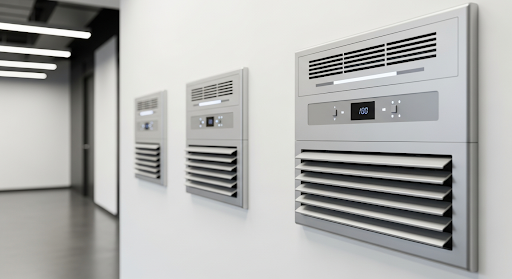
Modern buildings require heating and cooling solutions that balance efficiency, adaptability, and consistent comfort. As design complexity and sustainability expectations increase, HVAC systems must deliver performance without driving up operating costs. Fan coil units have become a trusted choice across residential, commercial, and institutional projects for meeting these demands effectively.
Fan coil units operate by passing air over a water-based heating or cooling coil, enabling precise temperature control with reduced refrigerant use. Understanding the types of fan coil units available is important, as each option is designed to suit specific space constraints, acoustic needs, and performance goals, making them a highly versatile HVAC solution.
Energy Efficiency and Cost Savings
Energy efficiency is a major reason behind the widespread adoption of fan coil units in modern HVAC design. As energy costs rise and sustainability standards become more demanding, building owners are prioritising solutions that reduce long-term operating expenses. By using water as the primary heat transfer medium, fan coil units deliver efficient heating and cooling with lower reliance on refrigerants.
Modern units feature electronically commutated fans and variable speed drives that adjust airflow based on real-time demand. This prevents continuous full-capacity operation, significantly reducing energy use during part-load conditions, which make up most daily operating hours.
Fan coil units also integrate seamlessly with air-source and ground-source heat pumps. Their ability to operate with low-temperature hot water and high-temperature chilled water enhances system efficiency, supports renewable energy use, and helps buildings achieve sustainability targets while controlling utility costs.
Superior Climate Control and Occupant Comfort
Comfort is not just about maintaining a set temperature. It also involves stable humidity levels, consistent airflow, and minimal temperature fluctuations throughout the day. Fan coil units excel in this area by offering localized control, allowing different zones within the same building to be conditioned independently.
In office environments, this zoning capability ensures that meeting rooms, open-plan areas, and executive offices can each maintain their own comfort levels. In hotels or residential buildings, individual room control enhances occupant satisfaction and reduces unnecessary energy use in unoccupied spaces.
Advanced control options further enhance this benefit. From simple wall-mounted controllers to sophisticated digital systems integrated with building management platforms, fan coil units can be tailored to meet the operational needs of each project. Remote monitoring, fault detection, and scheduled operation all contribute to improved comfort while simplifying facility management.
Flexibility in Installation and Design
One of the standout advantages of fan coil units is their adaptability to a wide range of building layouts. They can be installed in ceilings, walls, or floors, making them suitable for both new constructions and retrofit projects. This flexibility is particularly valuable in buildings with limited ceiling voids or architectural constraints that restrict the use of ducted systems.
Different types of fan coil units are available to address specific design challenges. Slim-profile ceiling-mounted units are ideal for modern offices with shallow ceiling spaces, while vertical wall-mounted units work well in residential apartments and hotel rooms. Underfloor units, on the other hand, provide an effective solution for perimeter heating in spaces with large glass facades.
Customisation options also play a significant role in their appeal. Units can be specified with different orientations, enhanced acoustic insulation, and finishes that blend seamlessly with interior design elements. This ensures that HVAC performance does not come at the expense of aesthetics, which is an increasingly important consideration in high-end developments.
Low Maintenance and Long-Term Reliability
Maintenance requirements are a critical factor when evaluating HVAC systems, especially for large buildings where downtime can be costly. Fan coil units are designed with simplicity and accessibility in mind, making routine maintenance straightforward and cost-effective.
Most units feature easily accessible filters that can be cleaned or replaced without specialized tools. These filters not only improve indoor air quality by trapping dust and airborne particles but also protect the internal components from debris buildup. This reduces wear and tear on the system and extends its operational lifespan.
Condensate management is another area where thoughtful design enhances reliability. Well-insulated condensate trays prevent moisture-related issues such as corrosion or microbial growth, ensuring consistent performance over time. With fewer complex components compared to some alternative HVAC solutions, fan coil units offer dependable operation with minimal maintenance intervention.
Quiet Operation for Noise-Sensitive Environments
Noise control is a major concern in environments such as hotels, hospitals, educational institutions, and corporate offices. Excessive noise from HVAC systems can disrupt concentration, reduce productivity, and negatively impact overall comfort. Fan coil units are engineered to operate quietly while still delivering effective air distribution.
Acoustic insulation, optimized fan design, and smooth airflow paths all contribute to low sound levels during operation. Even at higher capacities, modern units maintain a quiet profile, making them suitable for spaces where silence is essential. This characteristic is particularly valuable in hospitality settings, where guest comfort and restful environments are top priorities.
Improved Indoor Air Quality
Indoor air quality has become a central focus in building design, especially in the wake of increased awareness around health and well-being. Fan coil units support better air quality by facilitating regular air circulation and filtration at the zone level.
When integrated with fresh air systems, they help maintain a steady supply of clean air while efficiently managing temperature. This localized approach reduces the risk of uneven air distribution and ensures that occupants benefit from consistent indoor conditions. Cleaner air not only enhances comfort but also contributes to improved health outcomes and overall satisfaction.
Scalability for Diverse Applications
Another key advantage of fan coil units is their scalability. They can be deployed in small residential projects or expanded across large commercial complexes without compromising performance. This makes them an attractive option for developers and consultants who require a solution that can adapt to changing project scopes.
As building usage evolves over time, fan coil units can be reconfigured or upgraded to meet new demands. This adaptability protects the initial investment and ensures that the HVAC system remains relevant throughout the building’s lifecycle.
Conclusion
Fan coil units continue to stand out as a reliable and efficient solution for modern climate control. Their ability to deliver energy savings, precise comfort, flexible installation, low maintenance, and quiet operation makes them suitable for a wide range of applications. When integrated thoughtfully, fan coil units hvac solutions can support sustainable building performance while enhancing occupant comfort.
Within this context, Faisal Jassim Group has long been associated with the HVAC industry across the region. Through its experience, technical understanding, and involvement in diverse projects, the group has contributed to the adoption of reliable climate control solutions that align with evolving building standards and long-term operational needs.