
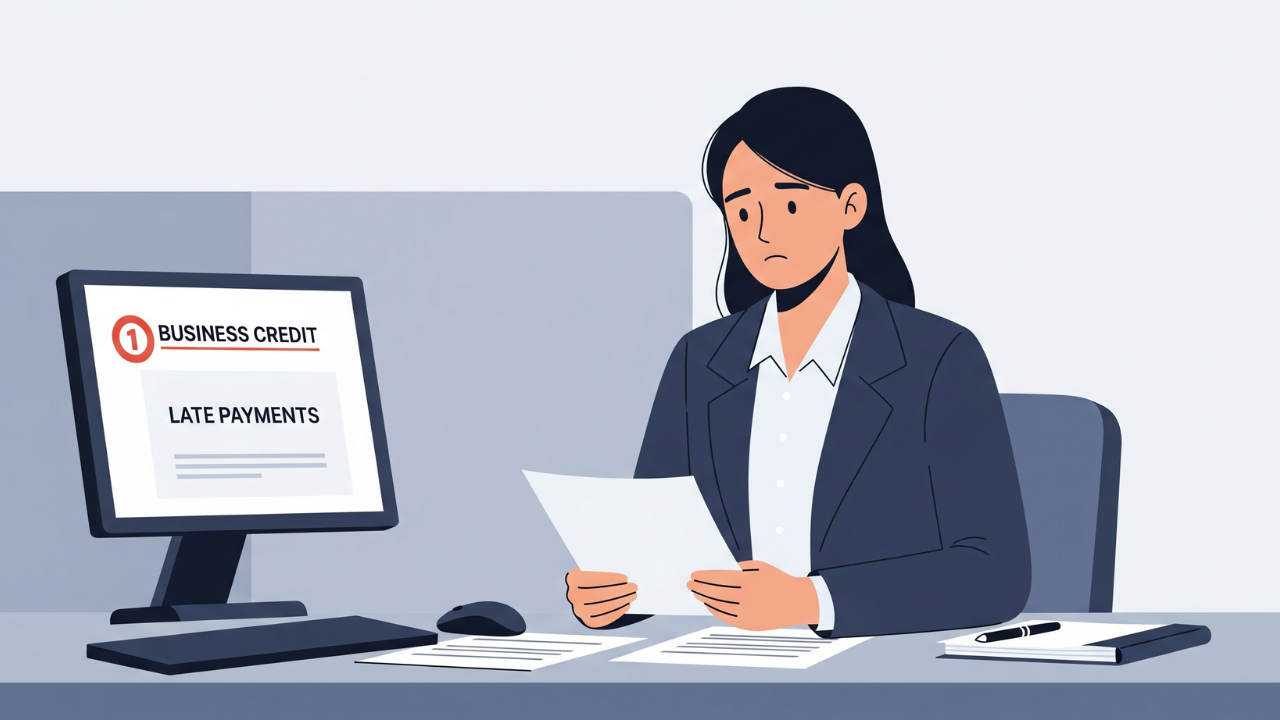
Late payments – they seem like a minor, harmless issue, but in reality, they can really mess up your business’s financial stability. A healthy credit score is one of the cornerstones of a financially stable and successful business.
However, if your lenders notice a pattern of delayed payments, it signals a risk, which can hinder your business’s growth.
So, what exactly is the impact on business credit of late payments? Let’s break it down.
The Consequences of Late Payments on Your Business’s Credit Rating
-
Lower Credit Score
Your business credit score reflects your payment behavior. Even a single late payment can lower your score, particularly if it’s reported to commercial credit bureaus.
Over time, multiple delays significantly reduce your credibility in the eyes of lenders and vendors.
-
Higher Interest Rates
Late payments label your business as high risk.
As a result, lenders may still approve loans or credit lines, but with higher interest rates. Eventually, you will end up paying more for the same amount of credit compared to businesses with a timely payment history.
-
Vendors Might Cut You Off
If late payments become a pattern, vendors may stop offering credit terms or set stricter conditions. This forces your business to pay upfront for supplies. Losing this flexibility can hurt your operations, particularly when you need regular business supplies or inventory.
-
Harder to Secure Future Financing
A history of delayed payments makes it difficult for businesses to secure financing in the future. It is because lenders might view your business as too risky. Eventually, you might be denied loan approval or be offered credit at high interest rates and unfavorable terms.
-
Difficulty in Leasing Property
Before leasing property, the first thing landlords check is your credit score. A low score due to late payments can lead to higher deposits or outright rejections. This makes it very difficult to secure office space or other business locations.
-
Missed Discounts
Many vendors offer discounts only when the payments are made on time. When you pay late, you miss out on these discounts, which could potentially save you 1-5% on invoices.
What Counts as a Late Payment?
Not all vendors follow the same rule, but here’s a general breakdown:
-
Payment Deadline
A payment is late of not made by the due date outlined in your agreement. For example, for a Net 30 account, it is typically 30 days after the invoice date.
-
Grace Period
Some vendors may offer a short grace period, typically 1-5 days.
-
Weekend/Holiday
If your due date falls on a weekend or a holiday, the vendor may still consider it late unless otherwise stated.
-
Late Payment Reporting
Payments are usually reported after 30, 60, or 90 days of non-payment, which can negatively impact a business’s credit score.
What to do to Make Payments On Time?
Now that we have covered the risks, let’s focus on the solutions. Here are some practical ways to keep your payments on track and your credit rating on top:
- Set up payment reminders for payment due dates.
- When in doubt, set up automatic payments for regular bills such as rent, utilities, or loan payments.
- Keep a strict eye on your business credit report from time to time. This will help you spot potential issues and take corrective measures as early as possible.
- Keep cash flow healthy so you’re not caught short.
- Communicate with your vendors if you anticipate being late. They might offer a grace period.
The Bottom Line
Alright, the impact of late payments on business credit is real. It’s not just about penalties, it’s about how lenders and vendors see your business.
Late payments can slow your growth. They can cost you deals. And they can close doors you didn’t even know were open. So, pay on time, stay organized, and treat your credit score as a business asset.