
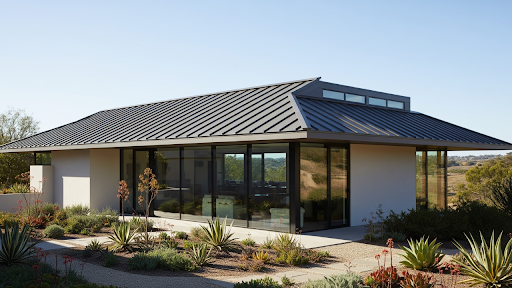
When it comes to roof design, the right slope is more than just an architectural choice — it’s a crucial factor that affects drainage, durability, and overall maintenance. Whether you’re planning a commercial structure or a modern residential build, understanding the low slope roof ratio can help you make an informed decision that balances style and performance.
Understanding Low Slope Roof Ratios
A roof’s slope, or pitch, is typically expressed as a ratio — for example, 2:12 means the roof rises two inches for every twelve inches of horizontal run. Low-slope roofs are defined by ratios between 1:12 and 4:12, and they’re often used for industrial, commercial, or minimalist-style homes.
This type of roofing offers sleek aesthetics and efficient use of materials, but it comes with specific challenges, especially related to drainage. Because the slope is so shallow, even small amounts of standing water can cause leaks or structural wear over time. That’s why selecting the right low slope roof ratio is essential to prevent moisture buildup and ensure long-term performance.
Why Roof Slope Matters
The slope of your roof directly affects how well it sheds water, snow, and debris. A steeper slope allows gravity to do most of the work, but a low slope needs additional design consideration. Proper installation of membranes, drains, and flashing becomes critical when working with low pitches.
For instance, a 1/4 inch per foot slope (1:48 ratio) is often the minimum recommended for effective drainage on flat or nearly flat roofs. In regions with heavy rainfall or snow, builders may opt for a slightly steeper ratio to avoid pooling.
Essentially, your slope determines not only how your roof looks but how it performs in your local climate.
Comparing Low and Steep Slope Roof Types
When choosing between low and steep slope roof types, it’s important to think about both function and form. Low slope roofs are ideal for:
- Commercial buildings and warehouses
- Modern homes with a minimalist design
- Structures where HVAC or solar systems are mounted on the roof
Steep slope roofs, on the other hand, are more common in traditional residential architecture. They allow faster runoff, better attic ventilation, and longer material lifespan — though they typically cost more in labor and materials.
If you’re designing a contemporary space, a low slope might be the aesthetic and practical winner, as long as it’s engineered with proper drainage systems.
Factors That Influence the Ideal Slope Ratio
Several factors determine the ideal low slope roof ratio for your project:
- Climate: Areas with frequent rain or snow need a higher slope for better drainage.
- Roofing material: Single-ply membranes like TPO or EPDM are best suited for low slopes, while shingles perform better on steeper roofs.
- Building design: Flat roofs complement modern architecture but demand precision installation and waterproofing.
- Maintenance: The lower the slope, the more frequently inspections and cleanings are required.
An experienced roofing contractor can evaluate these elements and recommend the most efficient ratio for your building’s needs.
The Role of Professional Expertise
Choosing the right roof ratio isn’t a one-size-fits-all process. A professional roofer can calculate the perfect balance between performance, cost, and aesthetics. They’ll assess your building’s layout, drainage potential, and local weather patterns to determine the best design solution.
Working with experts also ensures compliance with building codes and manufacturer warranties — crucial steps that protect your investment.
Conclusion
The low slope roof ratio you choose can make or break your building’s long-term performance. While low slopes offer sleek looks and cost efficiency, they demand careful attention to detail and expert installation. Understanding how slope interacts with materials, drainage, and climate will help you design a roof that stands the test of time — both functionally and aesthetically.