
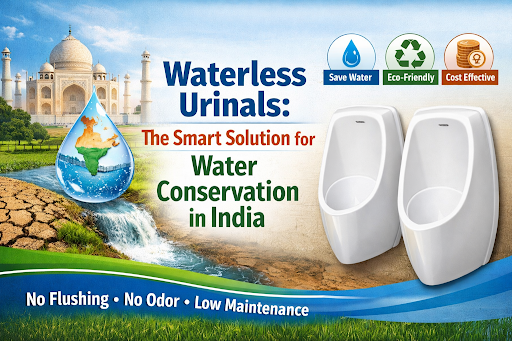
Water scarcity is becoming one of the most serious challenges facing India today. With increasing urbanization and rising population, the demand for water is growing rapidly. One of the most overlooked areas of water waste is restroom sanitation, especially traditional urinals that require flushing after every use.
Waterless urinal technology is emerging as a powerful solution to reduce water consumption without compromising hygiene.
How Much Water Do Traditional Urinals Waste?
Most conventional urinals use 1–3 liters of water per flush. In high-traffic places such as:
- malls
- offices
- airports
- railway stations
- universities
a single urinal can be flushed hundreds of times daily.
This results in tens of thousands of liters of water wasted every year from just one urinal.
What Are Waterless Urinals?
Waterless urinals are innovative sanitation systems that eliminate the need for flushing. Instead of using water, they rely on a special odor-control mechanism that allows liquid to pass into the drainage system while blocking unpleasant smells.
Modern waterless urinal systems are designed to maintain cleanliness, hygiene, and efficiency while drastically reducing water usage.
Benefits of Waterless Urinals
1. Significant Water Savings
Waterless urinals can save up to 100,000 liters of water per urinal every year.
2. Lower Maintenance Costs
Without flushing systems, there is less plumbing wear and fewer maintenance issues.
3. Odor-Free Restrooms
Advanced sealing technology prevents sewer gases from entering the restroom.
4. Environmentally Friendly
Waterless urinals help organizations reduce their environmental footprint and support sustainability initiatives.
Why Businesses Are Switching to Waterless Urinals
Many businesses and institutions are now adopting waterless urinal technology to achieve their sustainability goals. By installing water-saving sanitation systems, companies can:
- reduce water bills
- improve restroom hygiene
- support environmental conservation
- enhance green building certifications
Conclusion
Waterless urinals represent the future of sustainable sanitation. As water scarcity becomes more serious, adopting innovative solutions is essential for responsible resource management.
Organizations that invest in water-saving technologies today will play a key role in building a more sustainable future.