
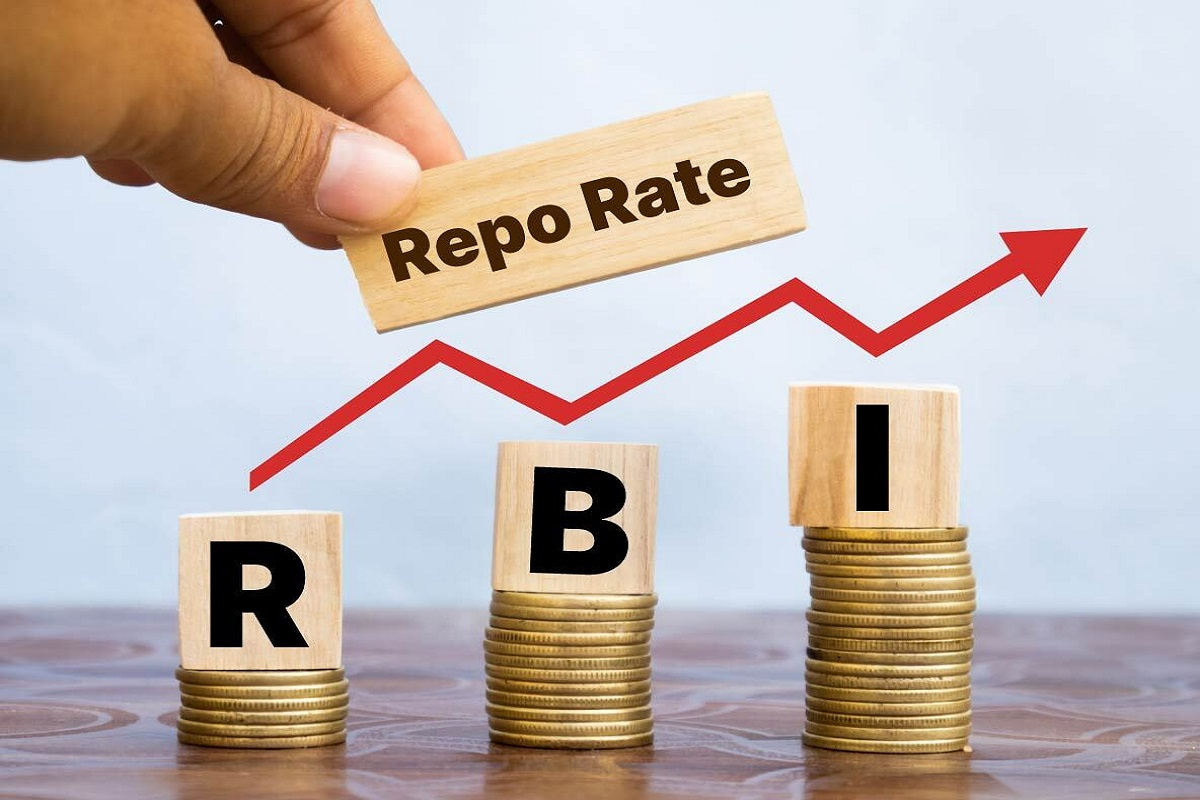
Repo rate is among the most significant tools utilized to construct India’s monetary policy that has long-run implications for the majority of economic variables. Whether you’re availing business or personal loans, understanding what the repo rate is and how it will impact you will help you make the appropriate money move. Through this article, we find out more about what the repo rate is, the way it works, and why it is a pillar of the Indian economic system.
What is Repo Rate
‘REpo rate’ is an abbreviation for ‘repurchase rate.’ Repo rate is the rate at which Reserve Bank of India (RBI) advances finance to commercial banks when the latter face tightness of finance in the short run. RBI, in effect, is advancing against security, usually government securities. The bank borrow undertaking to repurchase the security after a time period, hence ‘repo.’
Repo rate is one of the most effective monetary tools employed by central banks in controlling liquidity, inflation, and growth. The direction of the repo rate has a trickle-down effect on the economy that affects business, consumers, and financial institutions, including the volume of loans and consumer loans.
Repo Rate Importance in the Economy
Repo rate serves as a reference point for lending by commercial banks. When RBI cuts or raises repo rate, then bank lending interest rates to consumers, i.e., home finance, personal finance, and lending in general, are affected. This is a better explanation of why repo rate is important to the economy:
1. Control of inflation
One of the most significant jobs that are performed by the repo rate is controlling inflation. When the inflation goes out of hand, RBI increases the repo rate so that banks will not borrow and money in the market is tight. As money is tight in the economy, individuals will not spend less bucks, and the inflation is controlled.
2. Economic Growth
Cutting the repo rate has the opposite effect, pumping money into the financial system. When money is affordable, firms are in a position to acquire finance for expansion, and individuals are in a position to borrow at lower costs under house loans, personal loans, and car loans. This increases expenditure as well as economic activity.
3. Stability in the Banking System
The repo rate is the cushion for the banks in the liquidity shortage scenario. The banks would not cut down lending by borrowing from the RBI through the repo rate, and all is well with the financial system.
Impact of Repo Rate on Loans
The impact of repo rate trickles down to cost of borrowing to the business and individual segments. Home loan or loans, the customer experiences the impact of repo rate directly.
1. Impact on Interest Rates
When the RBI hikes the repo rate, lending is expensive for banks. Banks raise their lending rates to pass on the cost to customers. There is reduced expenditure and discouragement of lending as lending is expensive.
Cost of loan is reduced and promotes borrowing and increases economic growth when the repo rate is reduced.
2. Higher or Lower Loan EMIs
For repo rate increase, floating rate borrowers can switch variable Equated Monthly Instalments (EMIs) at will. Repo rate increase is equivalent to additional EMIs, while rate reduction is equivalent to lower EMIs. It becomes essential especially for those relying on personal loans since repayment duration period is certain to be determined depending on rate of interest movement.
If you’re planning to apply for online personal loan, it’s vital to monitor repo rate movements as they directly affect your EMI amount.
3. Effect on Credit Availability
The banks borrow in greater quantity when the repo rate is less since they have less cost of borrowing. This releases more amount of credit products that can be utilized by the consumer, such as home loans, education loans, and personal loans. When the repo rate increases, the lending market tightens and loans are expensive.
Repo Rate and Personal Loans: A Direct Link
Personal loans might be the savior for those who require money urgently like bill arisings unexpectedly, wedding expenses, or hospital expenditure. Personal loans are mostly provided at an extremely marginally higher rate of interest than secured loans like house loans. Repo rate can play a very substantial role in terms and conditions of personal loans as follows:
1. Low Interest Loans and Low Repo Rate
When RBI reduces the repo rate, the banks can borrow at a reduced rate. This decreases the lending rate of personal loans and thus make the loan cheaper for the customer. Such customers, who are wanting to take personal loans now, are benefited positively with lower EMIs and increased borrowing limits.
2. Repo Rate Hike and Costlier Loans
When there is inflation or economic uncertainty, the RBI may increase the repo rate. That increases lending, i.e., loan interest is higher, for example, consumer loans, therefore the customer will borrow only if indispensable. For floating interest individuals, increased repo rate can result in increased payments.
3. Repo Rate and Market Competition
Banks compete to provide the best of the loans to their clients, particularly at the high-demanding levels such as personal loans. Banks can provide favorable terms of the loan when the repo rates are low. When there is a high repo rate, banks use good customer credit ratings in an effort to reduce the risks.
Determinants of Repo Rate Decisions
RBI takes into account a great deal of variables within the economy when it lowers or increases the repo rate. They have short-term implications with long-term economic goals and are responsible for much of the monetary policy of India:
1. Trend in Inflation
Galloping inflation leads RBI to increase the repo rate in an attempt to cut down on liquidity and reduce the extent of cost. Deflation leads the repo rate to fall in an attempt to encourage expenditure.
2. Target for Economic Growth
If the economic growth is sluggish, then the RBI can reduce the repo rate in a way that the rate of borrowing of consumers as well as the industry will go down. It makes spending as well as economic activity rise.
3. Foreign Economic Developments
Repo rate decisions will be guided by global events, such as foreign trade, the price of oil commodities, and world financial stability. Stable Indian economy will be the driving force to maintain pace with the shift of world economics.
4. Government Debt
Government spending and supply of money will also have an impact on repo rate. Relaxation in the repo rate is provided for funding government debt obligation and creating government spending.
The Role of the Reverse Repo Rate
Apart from the repo rate, the reverse repo rate also has a say in monetary policy. It is a rate by which commercial banks are able to invest surplus money with the RBI. Any change in the reverse repo rate allows the RBI to manage the amount of liquidity in the banking system. For example:
- Reverse Repo Rate Cut: Encourages the banks to lend the money and not let it remain idle with the RBI, thus augmenting liquidity in the economy.
- Reverse Repo Rate Hike: Raises the cost of borrowings and assists the RBI in mopping up excess liquidity and containing inflation.
Conclusion
Repo rate, as the monetary policy element of India, contributes a lot to the people, industries, and economy as a whole. Whether a person is availing a personal loan or determining the price of a home loan, the repo rate is the first thing the need for making sound financial decisions. Repo rate immediately impacts interest rates, EMIs, and availability of credit and hence the need to consider it while making day-to-day financial choices.
As the borrowers and lenders, it is reasonable to observe repo rate movements and how they influence loans. And knowing why analogous economic trends produced the movements is a more authentic way to India’s economy. Overall, knowing repo rate well enables people and businesses to chart their money travels with surety and direction.