
Florida’s climate presents unique challenges for residential roofing, with frequent storms, intense sun exposure, and salt air contributing to accelerated roof deterioration. When roof damage occurs, navigating insurance claims becomes a critical process, determining whether homeowners receive adequate compensation for necessary repairs or replacement. Understanding the complexity of roof damage assessment and insurance claim procedures helps Florida homeowners advocate effectively for their interests.
Professional Florida insurance claim assistance for roofs provides expertise homeowners need to navigate complex claims processes successfully. Expert guidance ensures proper documentation, accurate damage assessment, and fair claim resolution.
Understanding Florida’s Roof Insurance Landscape
- Climate-Related Challenges
Florida’s tropical climate creates constant roof challenges. Hurricane-force winds, severe thunderstorms with hail, heavy rainfall, intense UV exposure, and salt air all accelerate roof deterioration compared to other regions. Insurance companies recognize these environmental factors, though claims denial or undercompensation remains common when homeowners lack professional representation. Understanding your roof’s vulnerability to climate impacts helps establish legitimate claim foundations.
- Insurance Policy Coverage Variations
Not all policies cover all types of roof damage equally. Understanding your specific coverage becomes essential before damage occurs. Some policies include hurricane deductibles exceeding standard deductibles. Others exclude certain damage types or require specific conditions for coverage. Reviewing your policy thoroughly before filing claims prevents unexpected coverage gaps.
The Importance of Professional Documentation
- Initial Damage Assessment
-
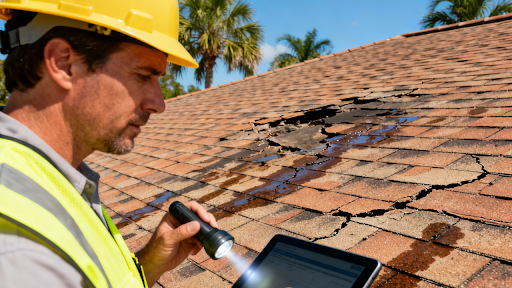
- Immediately following roof damage, a professional assessment establishes the extent and repair/replacement necessity. Professional roofers document damage comprehensively through photographs, measurements, and written descriptions. This documentation provides insurance companies with concrete evidence establishing damage legitimacy. Professional assessment carries far more weight with insurance companies than homeowner observations.
- Photographic Evidence
Clear, comprehensive photographs document damage from multiple angles, including aerial perspectives showing overall damage patterns. Professional photographers capture close-up details showing specific damage while providing wide-angle context establishing damage extent. This documentation proves invaluable when insurance companies question damage assessments or propose insufficient settlements.
- Written Reports
Professional written assessments describe damage types, locations, estimated repair costs, and replacement recommendations. These reports explain damage mechanisms—how wind, hail, or water intrusion caused observed damage—establishing that damage resulted from covered perils rather than maintenance failures. Detailed reports provide insurance adjusters concrete information supporting claim approval.
Navigating the Insurance Claims Process
- Claim Filing Procedures
Filing claims promptly establishes coverage eligibility and initiates an investigation promptly. Most policies require claims to be filed within specific timeframes. Provide insurers with all requested documentation, including policy numbers, loss dates, and damage descriptions. Professional representatives ensure proper documentation is complete, preventing claim delays or denials due to incomplete submissions.
- Working With Insurance Adjusters
Insurance companies assign adjusters to assess damage and determine claim values. Adjusters represent insurance companies’ interests, potentially undervaluing damage to minimize company expenses. Homeowners should have professional representatives present during adjuster inspections to ensure a fair assessment and challenge undervaluation. Professional presence balances the adjuster’s expertise with homeowner advocacy.
- Dispute Resolution if Needed
When homeowners and insurance companies disagree on damage assessment or claim value, disputes must be resolved. Some policies include appraisal procedures allowing a neutral third-party assessment of the extent. Professional representatives help homeowners pursue an appraisal when necessary, ensuring fair resolution rather than accepting inadequate settlements.
Roof Insurance Claim Services Professional Providers Offer
- Damage Evaluation and Documentation
Professional roof claim assistance services evaluate damage comprehensively, identifying all damage types that insurance policies should cover. Professionals understand insurance terminology and coverage requirements, ensuring that all claimable damage is documented. This comprehensive approach prevents homeowners from accepting settlements that exclude covered damage.
- Insurance Negotiation
Experienced claim professionals understand insurance company practices and negotiation strategies. They communicate professionally with insurance companies, presenting evidence to support full damage coverage. Professional communication often persuades insurers to approve claims or increase settlement amounts without the need for formal disputes.
- Supplemental Claim Filing
During roof repairs, contractors sometimes discover additional damage beyond initial estimates. Professional claim services file supplemental claims documenting newly discovered damage, securing additional insurance compensation when appropriate. This service prevents situations in which homeowners bear repair costs that insurance should cover.
Common Roof Damage Types in Florida
- Wind and Hurricane Damage
Severe wind events tear roofing materials, lift shingles, penetrate roof decking, and compromise roof integrity. Hurricane damage typically involves widespread material loss and structural compromise. Insurance companies cover hurricane damage through standard policies or with hurricane deductibles, though coverage details vary by specific policy.
- Hail Damage
Severe hailstorms create impact damage across roof surfaces, damaging shingles and underlying materials. While hail damage sometimes appears subtle, professional assessment identifies impact damage requiring repair. Hail damage claims typically proceed smoothly when professional documentation supports the legitimacy of the damage.
- Water Intrusion and Leaking
Water damage from roof defects, poor installation, or storm damage can extend beyond roofing systems into the interior. Insurance policies typically cover water damage resulting from covered perils, though coverage limits may apply. A professional assessment determines whether water damage resulted from covered roof damage or from maintenance issues.
Selecting Professional Claim Assistance
- Experience and Credentials
Choose claim professionals with extensive Florida roof damage experience and insurance claim expertise. Credentials from industry organizations, years in business, and track records of successful claims demonstrate reliability. Verify licensing and insurance coverage protecting you from potential professional errors.
- Transparent Fee Structures
Understand how professionals charge for services—whether flat fees, hourly rates, or percentage of recovered claim amounts. Transparent pricing prevents surprise costs. Many reputable professionals work on contingency, earning payment only when successful claim resolution occurs.
- References and Reviews
Ask for references from previous clients and review online testimonials. Positive feedback specifically mentioning claim success rates and professional integrity indicates reliability. Multiple references provide a comprehensive perspective on service quality.
Conclusion
Navigating Florida roof insurance claims successfully requires professional guidance, comprehensive documentation, and effective insurance negotiation. Professional roofing claim services provide expertise Florida homeowners need to secure appropriate claim settlement, ensuring insurance adequately compensates for damage requiring repair or replacement. Partnering with experienced professionals protects your interests throughout the claims process, from initial damage documentation through final claim resolution.