
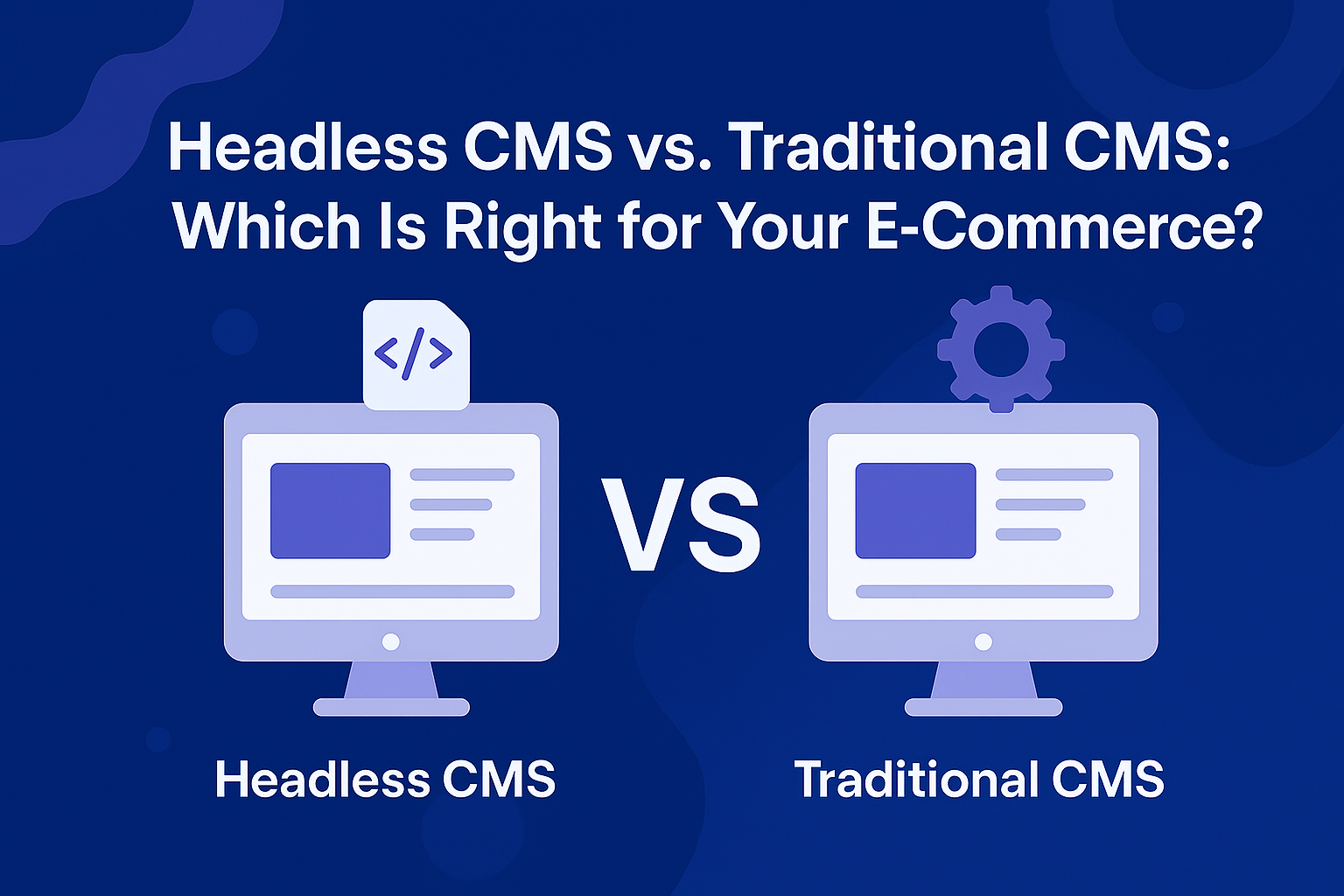
When running an e-commerce business, choosing the right content management system (CMS) can make or break your customer experience, marketing speed, and scalability. The two dominant options-traditional CMS and headless CMS-offer very different approaches to managing and delivering content.
So, which is better for your e-commerce business? Let’s break it down.
What Is a Traditional CMS?
A traditional CMS like WordPress, Magento, or Drupal comes as a monolithic platform. It combines both the frontend (the part users see) and the backend (where you manage content). You get templates, themes, and plugins all in one bundle.
These systems are easy to launch, especially for non-technical users. You can install a theme, customize your layout, and publish content-all from one dashboard.
Pros of a Traditional CMS:
- User-friendly: Non-developers can manage content and design.
- Quick to launch: Ideal for small stores or MVPs.
- All-in-one: Hosting, design, and content come bundled.
Cons of a Traditional CMS:
- Limited flexibility: Custom features or integrations can get messy.
- Performance bottlenecks: Large stores may suffer slow page speeds.
- Tight coupling: Frontend and backend are locked together, making redesigns harder.
What Is a Headless CMS?
A headless CMS decouples the frontend from the backend. It stores and delivers content via APIs, allowing developers to build the frontend however they want-whether it’s a website, mobile app, smart device, or kiosk.
Popular headless CMS options include Contentful, Strapi, Sanity, and Shopify Hydrogen.
This separation offers flexibility and scalability. You’re no longer tied to a single tech stack.
Businesses seeking headless website services often want a system that plays nicely with modern frameworks like React, Vue, or Next.js-offering blazing-fast experiences and future-proof builds.
Pros of a Headless CMS:
- Omnichannel-ready: Push content to any device or platform.
- Better performance: Frontends can be optimized for speed.
- Developer freedom: Build custom interfaces with any frontend tech.
- Future-proof: Easier to scale and evolve as your business grows.
Cons of a Headless CMS:
- Higher initial setup cost: Requires developer expertise.
- No visual page builders (by default): Content teams may need new tools.
- More moving parts: Hosting, frontend, and backend are separate systems.
Key Considerations for E-Commerce
When deciding between traditional and headless CMS, consider the following e-commerce-specific needs:
1. Speed and Performance
Slow websites kill conversions. A headless architecture, especially paired with JAMstack or static site generators, can significantly reduce load times.
2. Omnichannel Experience
Are you selling across web, mobile, social media, and IoT? Headless CMS enables true omnichannel commerce. Traditional CMS often struggles to adapt content for multiple platforms.
3. Flexibility and Customization
Traditional CMS platforms can feel rigid. Plugins can conflict or bloat the site. If you need fine-tuned UX or unique workflows, headless gives developers full control.
4. Content Workflow
If your marketing team wants drag-and-drop builders, traditional CMSs are often more user-friendly out of the box. But modern headless CMS platforms are catching up with visual editors and preview features.
5. Scalability
As your product catalog grows and customer traffic increases, a headless CMS scales more efficiently. It decouples performance from content delivery.
Who Should Choose a Traditional CMS?
- Small to mid-sized e-commerce businesses
- Limited development resources
- Need to get to market quickly
- Fewer content channels (mainly desktop/mobile web)
- Rely on plugins and themes for functionality
Who Should Choose a Headless CMS?
- Mid to large-scale e-commerce brands
- Multi-channel content strategy
- Require custom frontend experiences
- Have access to developers or use headless website services
- Focused on performance, scalability, and modern tech stacks
The Hybrid Option: Best of Both Worlds?
Some platforms offer a hybrid approach, combining traditional CMS usability with headless capabilities. Shopify Plus, for example, lets you use its CMS but connect it to a headless frontend via APIs.
These hybrid setups offer more flexibility than traditional CMS, without going fully headless from day one.
Final Verdict
Choosing between a headless and traditional CMS depends on your business needs, budget, and technical resources.
If you need fast time to market and have a simple store, a traditional CMS could be enough. But if you’re planning to grow fast, launch on multiple channels, or demand a superior UX, then headless is the way forward.
And if you’re not ready to go fully headless on your own, consider hiring experts that offer headless website services. They can help you build a flexible, scalable foundation without compromising usability or performance.
Interested in going headless? Partnering with an experienced team that provides headless website services can unlock the power of custom, high-performance commerce without the usual growing pains. Make the switch when you’re ready to scale smart.