
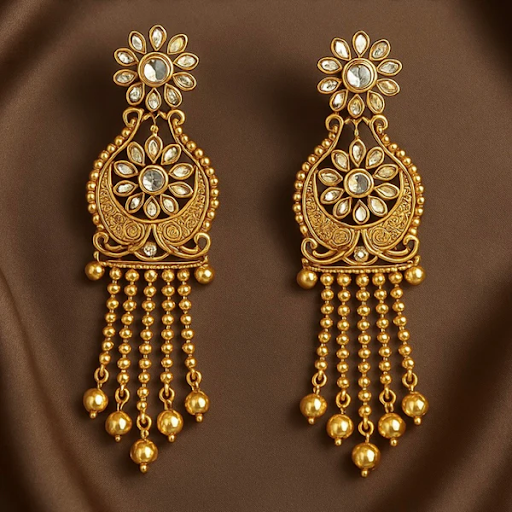
Jewelry traditions built around hand-set stones have long reflected shifts in culture, patronage, and craftsmanship. What once emerged from royal ateliers and court workshops now appears in contemporary wardrobes with adapted forms and lighter structures. The journey of stone-focused ear ornaments shows how design languages travel across centuries without losing their artistic identity. Each period adds new materials, methods, and wearing styles.
In today’s style landscape, heritage stone work is not restricted to ceremonial dressing but is interpreted for everyday and occasion wear alike. Designers and craft houses continue to reinterpret classical forms through modern finishing and comfort-focused engineering. This ongoing transition is especially visible in earrings for women, where traditional stone layouts are reshaped for modern usability without discarding their historical vocabulary.
Royal Origins of Stone-Set Ear Jewelry
Stone-set ear ornaments trace their structured development to royal and aristocratic workshops across South Asia and Central Asia. Court patronage encouraged precision, symbolism, and elaborate metalwork frameworks that could hold uncut or polished stones securely. Designs were often codified, with certain shapes linked to status, region, or ceremonial use. Workshop systems passed techniques through guild-style training rather than open markets.
Many early pieces were heavy, layered, and engineered for durability rather than comfort. Gold foil backing, closed setting, and symmetrical geometry were widely used to enhance stone brilliance. Enamel work and reverse detailing were added where craftsmanship standards demanded beauty from every angle. These historical foundations still influence modern adaptations, even when the scale is reduced.
Craft Foundations That Still Influence Modern Designs
Traditional stone ear ornaments rely on setting methods that differ from prong or claw settings common in Western jewelry. Closed-back techniques, foil enhancement, and pressure fitting remain important to preserve the visual depth of stones. Craft clusters often specialize in distinct regional methods that affect finish, color reflection, and durability. Hand processes still dominate where authenticity is prioritized.
Modern workshops may integrate lightweight alloys or reinforced frames while preserving surface craft. Comfort adjustments, such as hollow structures or modular parts, allow heritage styles to be worn longer. Surface polishing and stone alignment now use magnification tools while retaining manual placement. The blend of old and new methods defines today’s heritage-inspired production.
Closed Setting and Foil Backing Logic
Closed stone setting uses a sealed metal cavity behind the stone to enhance reflectivity and color. A thin foil layer is often inserted to amplify brightness and correct tonal variation. This method protects stones from rear exposure and stabilizes placement. It is particularly suited to flat-cut or table-cut stones used in traditional work.
Because the stone is enclosed, repair and resetting require skilled handling. The technique prioritizes visual richness over easy modification. It also contributes to the characteristic glow associated with classical stone ornaments. Many heritage replicas continue to use this structure for authenticity.
Hand Engraving and Surface Detailing
Engraving and chasing add dimensional character to otherwise flat metal surfaces. These details frame stones and create a visual rhythm across the ornament. Craftspeople use fine chisels and punches to create texture without weakening the structure. The result is depth that machine stamping rarely replicates.
Surface detailing often reflects floral, geometric, or court-inspired motifs. These patterns are not random decoration but part of a visual grammar. Even simplified modern versions borrow from these established vocabularies. The technique remains labor-intensive but visually distinctive.
Enamel Reverse Work Traditions
Reverse enamel work developed as a mark of craftsmanship excellence. The unseen back of the ornament received equal artistic attention. Colored enamel patterns were fired into carved recesses to create lasting designs. This practice signaled workshop pride and royal quality standards.
Modern commercial pieces sometimes print or coat backs instead of true enamel firing. However, artisan houses still preserve the original process. Reverse detailing also helps identify handcrafted lineage. Collectors often inspect the back to judge authenticity.
Explaining the Structure of Kundan-Style Craft
A major classical technique in stone ear ornament is the refined method associated with kundan earrings. This style uses highly purified gold layers or gold-toned substitutes to secure stones without visible prongs. The process involves building soft metal borders around each stone and compressing them into place. It allows irregular stone shapes to be used effectively.
The method is layered and sequential, not cast in one step. Stone placement, border forming, and surface finishing occur in stages. Because of this, production time is longer than standard casting methods. The visual effect is smooth, continuous metal flow around each stone.
Layered Assembly Method
Unlike cast settings, layered assembly builds the ornament gradually. A base frame is created first, followed by stone seating cavities. Thin metal strips are pressed around stones to lock them securely. Each layer supports the next structurally and visually.
This approach allows flexibility with non-uniform stones. It also reduces visible metal interruption around the gem surface. The result appears fluid rather than mechanical. That aesthetic is central to this craft style.
Stone Compatibility and Shape Use
Flat-cut, table-cut, and irregular stones are well suited to this setting approach. The method adapts to variation rather than forcing uniformity. This makes it compatible with glass stones, natural crystals, and treated gems. Shape diversity becomes a design advantage.
Because fit is manual, skilled judgment guides placement. Craftspeople adjust pressure and border thickness on a case-by-case basis. This reduces breakage risk during setting. It also contributes to the handcrafted signature.
Maintenance and Longevity Factors
Closed and layered settings require careful storage and gentle cleaning. Excess moisture and harsh chemicals can affect foil backing and adhesives in hybrid pieces. Professional repair is preferred over home adjustment. Preventive care extends lifespan significantly.
Weight distribution should also be considered for wear comfort. Modern adaptations often add reinforcement points. Buyers should understand construction before purchase. Craft method affects maintenance needs.
Final Thoughts on Heritage Stone Ear Jewelry Today
Heritage stone ear ornaments continue to evolve through reinterpretation rather than replacement. Craft techniques, layered settings, and reverse detailing still define quality in this segment. Structured forms once limited to courts now appear in adapted, wearable formats. Understanding the process helps buyers judge authenticity and durability.
Modern artisan-led brands such as Kare Kraft focus on handcrafted traditions, stone-setting methods, and culturally rooted design narratives across their collections and educational content. For readers exploring classical stone work, construction methods behind kundan earrings and related heritage styles remain essential areas of study when evaluating contemporary pieces