
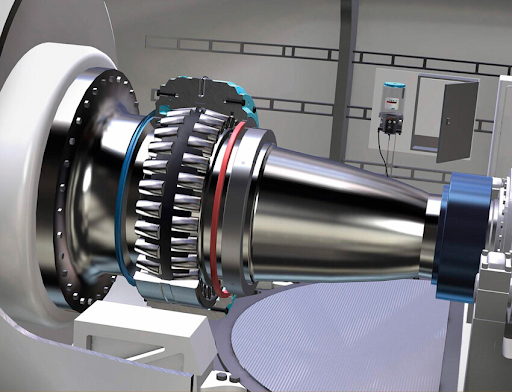
There’s a certain truth in heavy industry that never changes: machinery doesn’t fail in theory; it fails on the floor. Between shock loads, misalignment, abrasive grit, and continuous pressure, the components that hold equipment together face the kind of punishment no brochure can capture. Among those components, tapered roller bearings carry a weight far greater than their size suggests. Their job isn’t glamorous, but their influence on equipment life is massive, often underestimated until something gives way.
A Bearing Geometry Built for Real Work
Machinery operators know the difference between a bearing that only looks good on paper and one that actually survives high-torque starts, side-thrust loads, or uneven shaft pressure. Tapered geometry is no marketing flourish — it solves an everyday mechanical challenge.
The rollers and raceways aren’t shaped like uniform cylinders. Everything converges toward a single point along the axis. That detail changes everything. Instead of rollers rubbing or skidding, the motion stays aligned, controlled, predictable. The load spreads along the length of each roller rather than concentrating at a tiny contact zone. That’s the sort of architecture built for weight, grit, shock, and machines that never really rest.
How Load Moves Through the Bearing
Loads in real equipment rarely behave politely. Radial loads shift. Thrust loads twist. Misalignment sneaks in. A bearing that can’t manage mixed forces will fail early, often without warning.
Here, the tapered form shows its true logic.
When the shaft pushes sideways, the rollers respond. When heavy radial force arrives, the bearing absorbs it without collapsing into frictional chaos. This dual-load stability comes from the combination of line contact and angular design — a mix that allows tapered roller bearings to take punishment from multiple directions without losing their center.
Dealing With Stress Like a Workhorse
An operator might not see stress distribution, but the machinery certainly feels it. The long line of contact between rollers and raceways handles load the way a strong beam bears weight — through spread, not concentration.
This reduces early pitting, surface fatigue, and micro-cracks that typically grow unnoticed until downtime becomes unavoidable. The bearing isn’t simply surviving the workload; it is reshaping how the equipment deals with force. Even under fluctuating pressure, the contact pattern remains stable, lowering the odds of sudden degradation.
Material Toughness Matters
In the places where dust, metal fragments, vibration, and heat attack daily, bearing steel must do more than stay intact — it must resist deformation. Modern heat-treated alloys give the rollers the rigidity needed for shock and the elasticity required for repeated cycles. The result is a bearing that doesn’t chip under impact or soften under heat.
For operators in mining, forging, or heavy transport, that blend makes a measurable difference in uptime.
Stability, Rigidity, and the Calm Inside Moving Machinery
Machinery behaves differently when internal components stay rigid under load. A preloaded tapered design keeps internal movement tight, not loose or wandering. With the right preload, the bearing functions almost like a brace inside the system, holding shafts steady even when loads surge.
Why Rigidity Matters in Real Operations
Misalignment doesn’t always start big — sometimes it grows a little every week. When a shaft drifts even slightly from its axis, gear teeth start wearing out of pattern, seals begin deforming, and noise creeps in.
This gradual chain reaction destroys equipment life long before the main failure occurs.
Rigid support from tapered roller bearings slows this domino effect. Their controlled internal movement reduces vibration, stabilizes torque transfer, and prevents gears from drifting into destructive meshing patterns.
Surviving Shock Loads and Dirty Environments
Anyone who has seen a crusher plant, a construction site, or a steel mill up close knows the machinery isn’t pampered. Heavy blows, sudden torque changes, and chunks of raw material getting lodged in the wrong place are part of the job. Bearings that rely on point contact don’t handle these surprises well.
Tapered surfaces, with their broader contact pattern, absorb impact without concentrating stress on a tiny location. Instead of allowing a single roller to take the force, the load spreads across multiple rollers and a larger raceway surface.
Tough Conditions Demand Tough Bearings
From conveyors and reduction gearboxes to earthmoving axles, machines inhale dust, metal chips, and moisture. No matter how good the seals are, contamination eventually finds a way in.
Bearings with robust, hardened surfaces and tapered profiles stand a better chance against abrasive intrusion. They hold lubrication better, resist denting from debris, and offer enough internal clearance control to keep particles from spiraling into major damage.
Lower Friction, Lower Heat, Longer Life
Heat is the quiet enemy inside rotating systems. Too much of it breaks down lubrication, expands metal, and starts a cycle of deterioration that’s hard to catch early.
Line contact in tapered roller bearings minimizes sliding. Less sliding means less heat. Less heat means lubricants last longer, cages deform less, and the bearing stays within its performance window for extended periods.
Lubrication That Actually Stays Where It Should
In many industrial settings, lubrication isn’t perfect. Some machines depend on intermittent grease cycles; others deal with contaminants thinning the lubricant film.
Tapered designs use geometry to keep lubricant film stable across the roller length. Even when circumstances aren’t ideal, the rollers maintain a supporting layer that keeps metal surfaces from touching. Over time, this small advantage translates into longer service intervals and fewer unexpected failures.
A Direct Boost to Equipment Life and Operating Cost
Look at the replacement logs or downtime charts in any heavy plant and you’ll see a pattern: when tapered roller bearings are used instead of lighter duty bearings, failures go down and equipment life increases.
This isn’t theory. It’s fewer alignment issues, slower wear, better shock resistance and less frictional heat. Each of these means longer time between overhauls, fewer gear replacements, less lubricant consumption and less energy wasted through friction.
Even in mid-load applications the effect is visible. Machines run with less vibration, operators report smoother torque response and maintenance teams have fewer emergency shutdowns. Over time these savings add up to a big impact on annual operating budgets.
Conclusion
Machinery that deals with fluctuating, unpredictable, or heavy loads depends on components that don’t flinch under pressure. Tapered roller bearings deliver this reliability through geometry, material strength, shock resistance, and load distribution built for real industrial work. With the right preload, alignment, and lubrication discipline, these bearings push equipment toward longer service intervals, quieter operation, and a noticeably lower risk of sudden mechanical failure. They bring stability to the systems that keep industries running and add years to equipment life through a design engineered for the toughest conditions.