
You’ve probably seen it in action. Someone’s pointing their phone at an empty corner of their living room, and suddenly a digital couch appears.
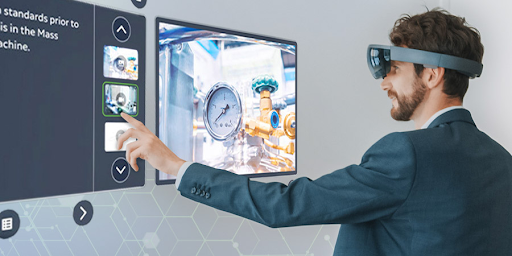
Or a mechanic throws on smart glasses, and the wiring diagram hovers over the engine. That’s what augmented reality is—technology slipping into our everyday spaces without fully taking them over.
It looks simple and feels natural. But under the hood, augmented reality (AR) is brutal on networks. Every virtual chair, every overlay, every real-time navigation arrow relies on massive amounts of data moving across invisible pipelines in milliseconds.
Miss a few frames, lag a millisecond too long, and the experience collapses—objects drift, context breaks, immersion fades.
That’s why understanding the old-school OSI model layers isn’t just academic anymore—it’s the backbone of making AR actually usable.
The Demands of AR
Here’s the thing: AR is greedy. It doesn’t just sip bandwidth. It gulps it down.
- Heavy data loads. 3D models, high-resolution textures, and live video streams all compete for space. Plus, sensor & camera data’s upstream demands of AR can rival or exceed the downstream load seen in VR.
- Latency intolerance. You turn your head; the overlay has to move instantly with you. Even a half-second lag is enough to make someone dizzy — or worse, in industrial settings, it can cause real operational mistakes or hazards.
- Constant reliability. A dropped signal doesn’t just mean a spinning wheel; it means the AR experience collapses on the spot. Packet drops or retransmissions are much harder to hide when every millisecond counts.
So, while AR feels flashy on the surface, the success of it lives and dies on the plumbing we rarely think about: networking.
A Quick Detour Back to Networking 101
This is where the OSI model layers matter. Remember those seven layers from networking class? They can feel like dusty theory until you see how AR leans on every single one.
- Physical Layer. The literal signals — fiber, Wi-Fi, or 5G — that carry AR’s heavy data loads. Weak here (poor signal, interference, noise)? Nothing works.
- Data Link. Keeps packets in line, avoids collisions, makes sure frames don’t get corrupted.
- Network. Routes all that AR data between devices, servers, and cloud systems. Especially critical for multi-user AR apps. It may also be used to keep latency low while scaling.
- Transport. Guarantees data arrives whole and in the right order. Imagine instructions for surgery coming in scrambled — no thanks.
- Session. Sets up, maintains, and tears down live conversations between your AR headset and the backend. If the session derps, your view freezes.
- Presentation. Converts raw data into something your device can actually render into overlays or models. It also handles encryption, data transforms, versions.
- Application. The flashy AR app itself — whether it’s a shopping tool, training program, or entertainment game.
Strip out one layer, and suddenly that seamless AR experience starts glitching.
Real-World Dependence on Networking
This isn’t just theory. You see it in industries already betting on AR:
- Retail. AR fitting rooms or product previews demand silky-smooth streaming to reduce returns, boost engagement, and differentiate. Laggy demos cost sales.
- Healthcare. Surgeons using AR overlays mid-operation rely on data accuracy down to the millisecond. One hiccup could be catastrophic.
- Manufacturing. Workers guided by AR’s step-by-step need real-time feedback. If the connection drops, the assembly line stalls or defects get introduced, costing thousands of dollars per minute.
- Gaming. Immersion dies the second latency kicks in. Gamers won’t forgive it.
So, the question isn’t “Can AR work?”— we already know it can. The real challenge is “If networks can keep pace at scale, reliably, and under real constraints?”
The Rise of Edge Computing and 5G
The good news: networks are evolving. Two big players are making AR less of a futuristic dream and more of an everyday tool:
- 5G. Higher bandwidth, lower latency, and more stable connections mean AR can finally breathe.
- Edge computing. Instead of sending every request to a faraway data center, edge servers process data closer to you. That shrinks delays, device load, and makes AR feel instant.
Without these, AR would still be stuck as a cool-but-clunky demo.
But Let’s Be Honest — Challenges Still Exist
Even with stronger networks, AR faces hurdles:
- Coverage gaps. 5G isn’t everywhere yet. Wi-Fi reliability still varies wildly based on interference, congestion, and physical environment.
- Device strain. Phones and headsets overheat when juggling AR’s heavy data requirements.
- Interoperability. Not every AR system plays nicely with every network setup. Proprietary protocols, vendor‑specific optimizations, or mismatched APIs can lead to incompatibilities.
This is why understanding fundamentals — like the OSI model layers — matters. They give engineers a roadmap to find where the bottleneck really lives.
Wrapping It Up
At first glance, you might think of what is augmented reality as purely a visual story — holograms, filters, navigation prompts. But dig deeper, and it’s really a networking story.
AR thrives or dies based on bandwidth, latency, and the invisible protocols that keep data moving.
So next time you slip on AR glasses or point your phone at the floor to “see” a new table, remember: the graphics are the show, but the network is the stage. And without the quiet work of the OSI model layers, the whole thing collapses before the curtain even rises.