
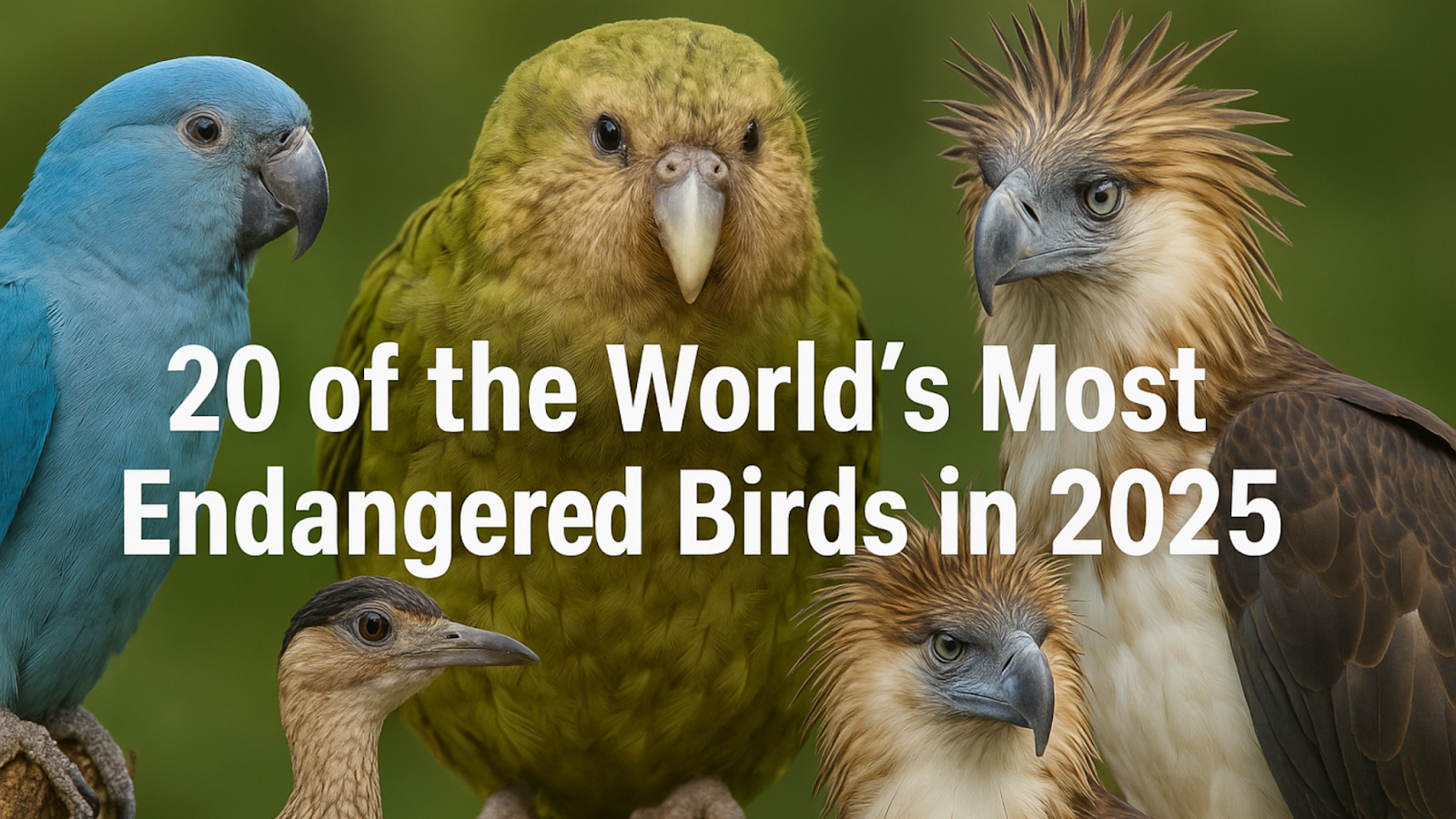
The world is home to thousands of bird species, each playing a vital role in maintaining ecological balance. Unfortunately, habitat destruction, climate change, and human activities have pushed many species to the brink of extinction. By 2025, several bird populations are expected to decline drastically unless urgent conservation efforts are implemented. Below is a list of 20 of the world’s most endangered birds in 2025, along with their current threats and conservation status.
1. Spix’s Macaw (Cyanopsitta spixii)
Once thought to be extinct in the wild, this vibrant blue parrot is critically endangered due to illegal trapping and habitat loss.
2. Kakapo (Strigops habroptilus)
This flightless parrot from New Zealand is one of the rarest birds, with fewer than 250 individuals remaining.
3. California Condor (Gymnogyps californianus)
With a wingspan of nearly 10 feet, this scavenger bird has faced near extinction due to lead poisoning and habitat destruction.
4. Philippine Eagle (Pithecophaga jefferyi)
Known as the “monkey-eating eagle,” this majestic bird is critically endangered due to deforestation.
5. Forest Owlet (Heteroglaux blewitti)
Once believed extinct, this small Indian owl is now critically endangered with fewer than 250 individuals left.
6. Great Indian Bustard (Ardeotis nigriceps)
Habitat loss and hunting have reduced this bird’s population to fewer than 150 in the wild.
7. Northern Bald Ibis (Geronticus eremita)
This migratory bird is critically endangered, with only small colonies remaining in Morocco and Syria.
8. Javan Hawk-Eagle (Nisaetus bartelsi)
Indonesia’s national bird is under severe threat from deforestation and illegal wildlife trade.
9. Spoon-billed Sandpiper (Calidris pygmaea)
With fewer than 500 individuals left, this small wader faces habitat destruction in its breeding grounds.
10. Madagascar Pochard (Aythya innotata)
One of the rarest ducks in the world, this species was rediscovered in 2006 after being presumed extinct.
11. Sumatran Ground Cuckoo (Carpococcyx viridis)
This elusive bird is critically endangered due to deforestation in Sumatra.
12. Honduran Emerald (Amazilia luciae)
This hummingbird is found only in Honduras and is threatened by habitat destruction.
13. New Zealand Fairy Tern (Sternula nereis davisae)
With fewer than 40 individuals left, this seabird is one of New Zealand’s most endangered species.
14. Siberian Crane (Leucogeranus leucogeranus)
Hunting and wetland destruction have pushed this migratory bird to the brink of extinction.
15. Red-headed Vulture (Sarcogyps calvus)
This scavenger has suffered a 90% population decline due to poisoning and habitat loss.
16. Blue-throated Macaw (Ara glaucogularis)
Native to Bolivia, fewer than 400 of these parrots remain in the wild.
17. Black Stilt (Himantopus novaezelandiae)
This wading bird is one of the rarest in the world, with fewer than 100 adults remaining.
18. Bengal Florican (Houbaropsis bengalensis)
Habitat conversion for agriculture has left fewer than 1,000 of these bustards in the wild.
19. Hawaiian Crow (Corvus hawaiiensis)
Extinct in the wild, conservationists are working to reintroduce this intelligent bird.
20. Christmas Island Frigatebird (Fregata andrewsi)
With fewer than 2,500 individuals left, this seabird is threatened by invasive species and habitat loss.
The Role of Conservation and Wild Photography Photos
Conservation efforts, including habitat restoration and breeding programs, are crucial to saving these species. Additionally, raising awareness through wild photography photos can help highlight the plight of these birds. Photographers who capture these rare species contribute to education and inspire global conservation action.
How You Can Help
- Support wildlife conservation organizations.
- Reduce your carbon footprint to combat climate change.
- Avoid products that contribute to deforestation.
- Share wild photography photos to spread awareness.
The survival of these birds depends on immediate action. By working together, we can ensure that future generations will still have the chance to witness these magnificent creatures in the wild.